




The Exercise That Asks for Almost Nothing
Somewhere along the way, fitness got complicated. You need the right shoes, the right app, the right split, the right pre-workout. The bar kept rising until “getting healthy” started to feel like a project you needed a degree to manage.
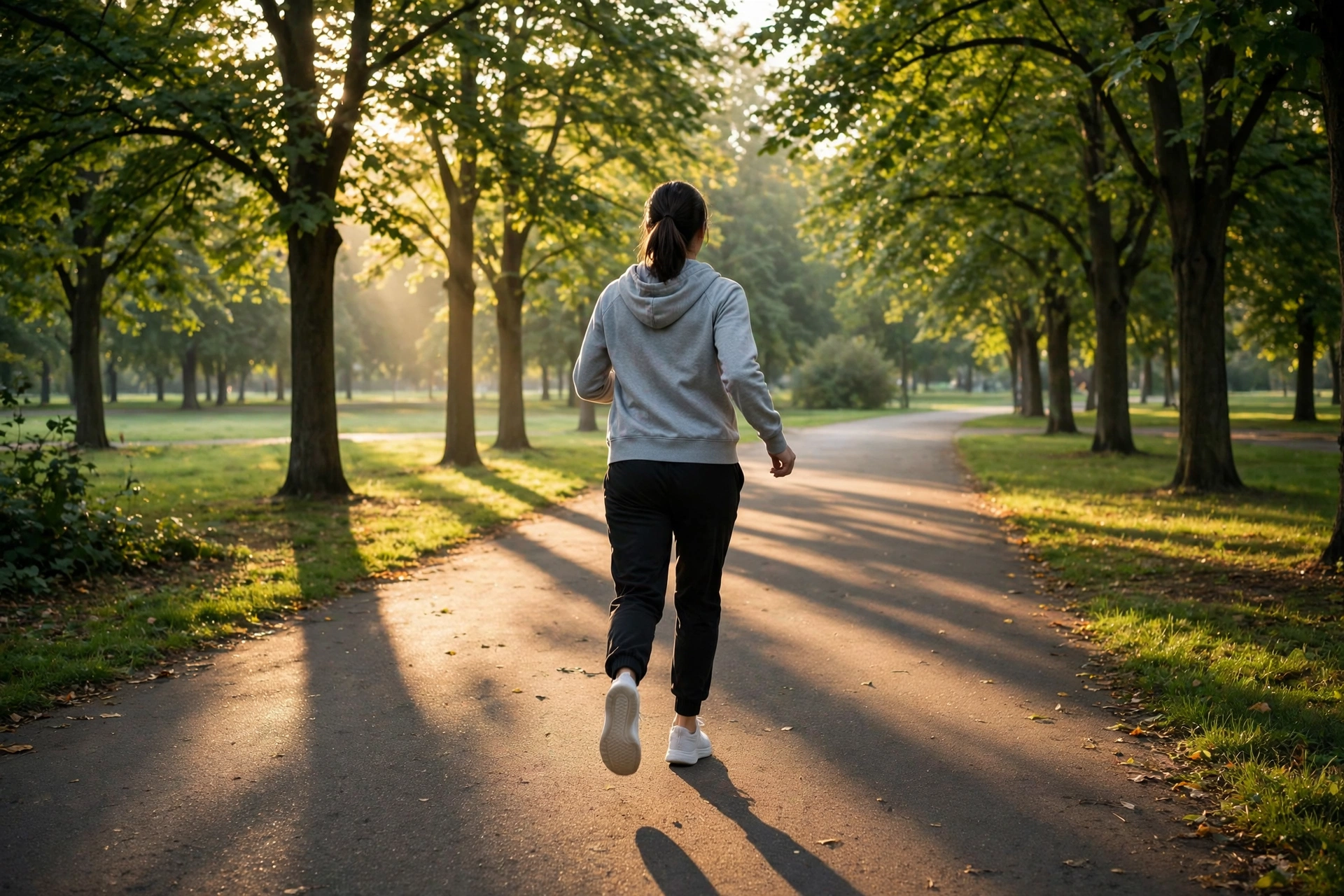
Meanwhile, sitting right there in plain sight — free, no equipment required, no learning curve — is walking. And here’s the part most people miss: it might be the single best health investment you can make for the time you put in.
I’m not saying walking replaces everything. But if you currently exercise somewhere between “rarely” and “never,” a daily 30-minute walk will move the needle more than almost anything else you could do. Here’s why — and how to actually make it stick.
1. Your Heart Will Thank You
Walking at a brisk pace is aerobic exercise. Full stop. Your heart rate rises, blood circulates more efficiently, blood pressure tends to drop, and over weeks and months your resting heart rate follows it down.
Large observational studies have consistently found that regular walkers have a lower risk of heart disease and stroke than people who don’t walk — and you don’t need to power-walk like you’re late for a flight. A pace where you can talk but would rather not sing is the sweet spot. That’s roughly 100 steps per minute for most adults.
2. Your Blood Sugar Loves a Walk
This one is genuinely underappreciated. A short walk after meals — even just 10 to 15 minutes — helps your muscles pull glucose out of your bloodstream, smoothing out the blood sugar spike that follows eating.
For anyone with prediabetes, type 2 diabetes, or a family history of it, the post-meal walk is one of the simplest, most effective habits there is. Think of dinner as having a sequel: dinner, then a stroll. Your blood sugar doesn’t care whether you moved elegantly or in pajamas.
3. Your Brain Gets a Reset
Ever noticed that hard problems feel easier after a walk? That’s not your imagination. Walking increases blood flow to the brain, and a pile of research links regular walking with better mood, lower anxiety, and sharper thinking.
There’s something about the rhythm of it — the bilateral movement, the changing scenery — that seems to loosen stuck thoughts. Plenty of famously creative people were obsessive walkers. They weren’t just burning calories; they were thinking. If stress has you wound tight, a walk is cheaper than a therapist’s waiting room and available right now.
4. You’ll Sleep Better
People who walk regularly tend to fall asleep faster and sleep more deeply. The effect is especially noticeable when the walk happens earlier in the day and — bonus — outdoors, where natural light helps set your body’s internal clock.
Fair warning: an intense walk right before bed can leave some people wired. Keep the evening version gentle, and let the morning or afternoon walks do the heavy lifting for your sleep.
5. Your Joints and Back Get Some Love
Walking is low impact, which makes it one of the kindest exercises for joints. The gentle, repetitive motion actually nourishes cartilage — joints don’t have their own blood supply, so they rely on movement to circulate the fluid that feeds them.
And if you sit all day, your lower back is quietly begging for a walk. The hip flexors shorten, the glutes switch off, the spine compresses — walking gently reverses all of that. It’s the antidote to the chair.
How to Start (Without Overthinking It)
The mistake people make with walking is treating it like a workout program that needs perfect adherence from day one. It doesn’t. Here’s a saner way in:
- Start with 10 minutes. Seriously. A short walk you actually do beats a 30-minute plan you skip. Add five minutes a week until you hit 30.
- Anchor it to something. Walk right after lunch, right after dropping the kids off, or the moment you close the laptop. Habit stacking works — “after X, I walk” beats “I’ll walk sometime.”
- Split it if you must. Three 10-minute walks count. Your body keeps the score either way.
- Leave the shoes by the door. Friction kills habits. If your walking shoes are buried in the closet, the couch wins.
- Make it pleasant. A podcast, music, an audiobook, a friend, or just the sound of your neighborhood. Walking you enjoy is walking you repeat.
Small Tweaks That Multiply the Benefits
- Pick up the pace for intervals. Walk briskly for two minutes, easy for two minutes, repeat. You get more cardiovascular benefit in the same time.
- Find a hill. Inclines work your glutes and calves harder and raise your heart rate without needing to run.
- Carry good posture. Stand tall, shoulders relaxed and back, eyes forward — not down at your phone. Good posture turns a walk into a back-strengthening habit.
- Walk with someone. You’ll walk longer, show up more often, and get a social connection in the bargain. Two health habits for the price of one.
The Honest Caveats
Walking has limits, and honesty matters. It won’t build much upper-body strength — pair it with some bodyweight exercises if you want that. And weight loss from walking alone is slow; it works best alongside sensible eating, not as a license to eat more.
Also: if you have chest pain, dizziness, severe joint problems, or any condition that makes exercise risky, check with your doctor before starting, even with something as gentle as walking.
The Bottom Line
You don’t need a gym membership, a fitness tracker, or a motivational quote taped to your fridge. You need comfortable shoes and a door.
Thirty minutes a day. That’s a lunch break, a phone call, or one episode of a show you won’t remember next week. Over a year, those walks add up to roughly 180 hours of your heart pumping stronger, your blood sugar steadier, your mind clearer, and your sleep deeper.
Fitness doesn’t have to be dramatic to work. Sometimes it just has to be daily. Lace up and go.
Disclaimer: This article is for informational purposes only and is not medical advice. If you have a health condition or concerns, please consult a qualified healthcare professional.