




Forget the 8-Glass Rule — Here Is What Hydration Really Looks Like
Most of us grew up hearing the same line: drink eight glasses of water a day. It is printed on school posters, repeated by fitness influencers, and stuck in our heads like a rule we are all quietly failing. But if you ask a dietitian where the “eight glasses” idea came from, you will get an awkward pause. The truth is that it was never a scientifically settled number — it was a suggestion that hardened into gospel.
That does not mean hydration is a myth. It means the real story is more interesting, and more useful, than a single number. Your water needs depend on your body size, your activity, your food, your climate, and even the season. A person who works on a construction site in July needs a very different intake than someone who works at a desk in an air-conditioned office. A single rule for both was never going to hold up.
So let us talk about what hydration actually looks like in everyday life — how to tell whether you are drinking enough, and how to fix it without carrying a gallon jug everywhere you go.
Why Water Matters More Than You Think
Water is involved in nearly everything your body does. It regulates temperature, carries nutrients, cushions joints, and helps the kidneys flush waste. Even mild dehydration — the kind you get from a busy morning where you forgot to drink anything before lunch — can leave you feeling tired, foggy, and headachy. It is one of those sneaky problems: by the time you feel thirsty, you are already running a little low.
Studies on office workers have repeatedly shown that even small amounts of dehydration can affect concentration and mood. It is not dramatic. You do not collapse. You just get a little worse at everything — a little slower on that report, a little snappier with your family, a little more convinced that you need a third coffee. Sometimes the most honest question you can ask yourself at 3 p.m. is not “do I need caffeine?” but “when did I last drink water?”
How Much Do You Actually Need?
The honest answer: there is no magic number, but there are useful benchmarks. The U.S. National Academies of Sciences suggests roughly 3.7 liters (about 15.5 cups) of total daily water for men and 2.7 liters (about 11.5 cups) for women — and that includes water from food. Since roughly 20 percent of your water typically comes from meals, especially fruits and vegetables, the amount you need to actually drink is a bit less than those totals.
A simpler starting point that many dietitians use: around half an ounce to one ounce of water per pound of body weight per day. For a 160-pound person, that is roughly 80 to 160 ounces — a wide range on purpose, because life is wide. Someone exercising hard in heat lands near the top; someone eating plenty of soups, fruits, and salads on a lazy day lands near the bottom.
And yes, coffee counts. The old claim that caffeine “dehydrates” you has been largely debunked — a cup of coffee contributes more fluid than it makes you lose. The same goes for tea, milk, and even fruit juice. Plain water is still the best default, but your morning coffee is not sabotaging you.
The Signs You Are Not Drinking Enough
Your body sends signals long before things get serious. Here are the ones worth watching:
- Pale yellow is the goal. Dark yellow or amber urine is the classic early warning. It is free, instant feedback — no app required.
- The afternoon slump. If your energy consistently crashes mid-afternoon despite decent sleep, dehydration is a common hidden contributor.
- Headaches that creep in. Tension-type headaches after hours without fluids are a familiar pattern for desk workers.
- Dry mouth and lips. Obvious, but easy to ignore when you are busy.
- Constipation. The colon pulls water from waste; short on fluids, everything slows down.
- Feeling hungry when you just ate. Thirst signals and hunger signals can blur together. A glass of water before a snack is a smart test.
Practical Ways to Drink More Without Thinking About It
Knowing you should drink more water and actually doing it are two different things. The trick is to design your day so it happens automatically:
- Start with a glass before coffee. Keep a glass by the bathroom sink and drink it right after brushing your teeth. Morning water is the easiest habit to anchor because the trigger never moves.
- Keep water where you look. A bottle on your desk beats a bottle in the kitchen. Out of sight really does mean out of mind.
- Eat your water too. Cucumber, watermelon, oranges, lettuce, and strawberries are all over 90 percent water. A salad does more hydrating work than most people give it credit for.
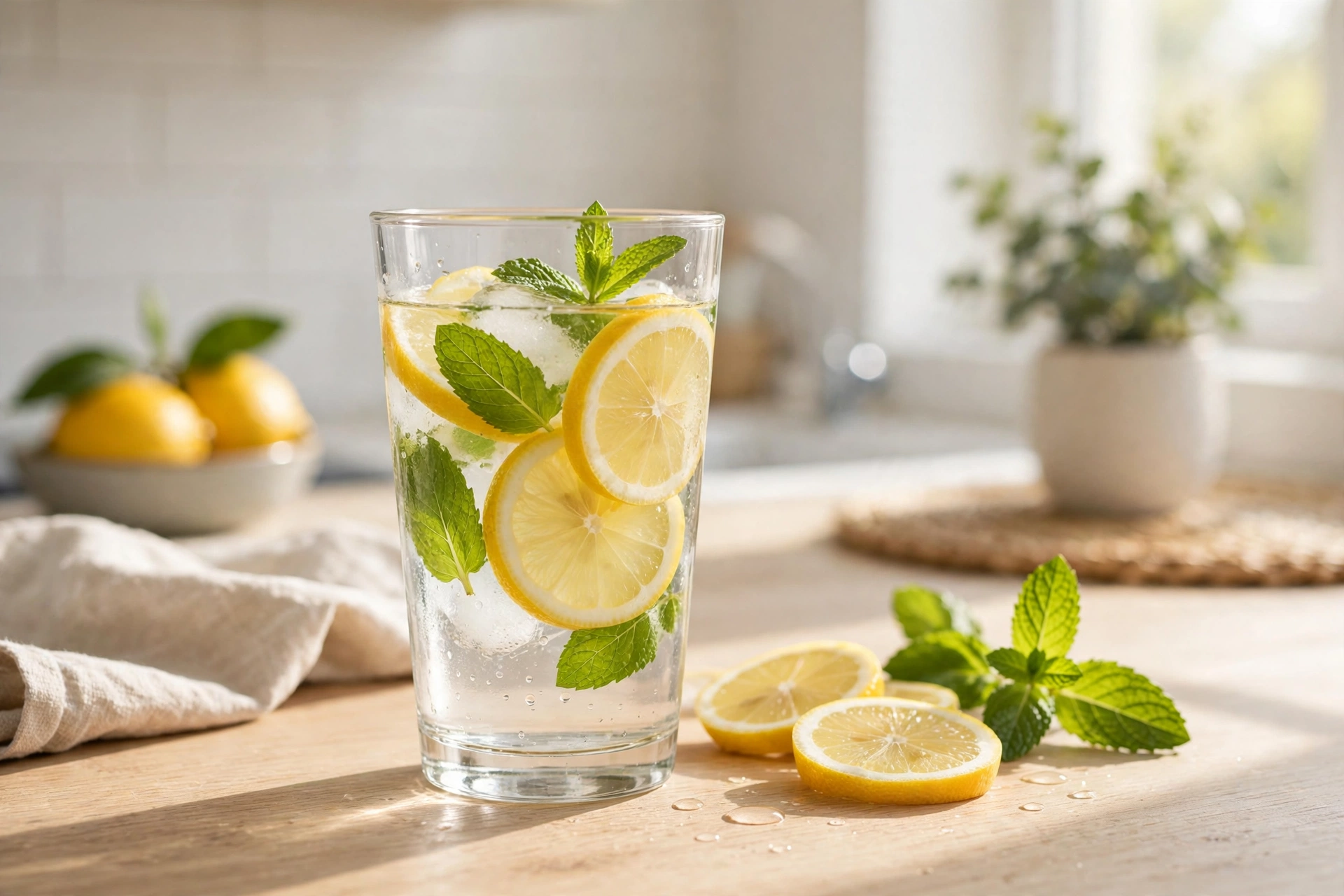
- Flavor it if plain bores you. Lemon, mint, cucumber slices, or a splash of coconut water turn a chore into something you actually reach for. There is no prize for suffering through plain water you hate.
- Set a soft rule, not a hard one. Instead of “drink 3 liters,” try “one glass between each meal and one during my afternoon break.” Small anchors survive busy days; rigid quotas do not.
- Adjust for exercise and heat. Drink before, during, and after workouts. On genuinely hot days or after heavy sweating, do not chase pure water alone — a little salt and electrolytes in a sports drink or coconut water helps your body actually hold onto the fluid.
Can You Drink Too Much?
Yes, though it is rare and usually comes from extremes — like an endurance athlete chugging huge volumes of plain water for hours without electrolytes, or a water-drinking challenge gone too far. Overhydration dilutes blood sodium (a condition called hyponatremia) and can cause confusion, nausea, and swelling. For the average person, the sensible rule is simple: drink steadily through the day, drink to thirst plus a little, and do not force gallons. Your body is good at telling you what it needs if you listen.
The Bottom Line
The eight-glass rule was never really about eight glasses. It was about paying attention. Check your urine color, notice how you feel in the afternoon, and build a few effortless habits around water instead of treating it like a quota to dread. Hydration is one of the cheapest, simplest health upgrades there is — no gym membership, no supplement, no willpower marathon required.
Tomorrow morning, before you reach for your phone or your coffee, drink a glass of water. Small thing. Big difference. That is usually how health works.
Disclaimer: This article is for informational purposes only and is not medical advice. If you have a health condition or concerns, please consult a qualified healthcare professional.