









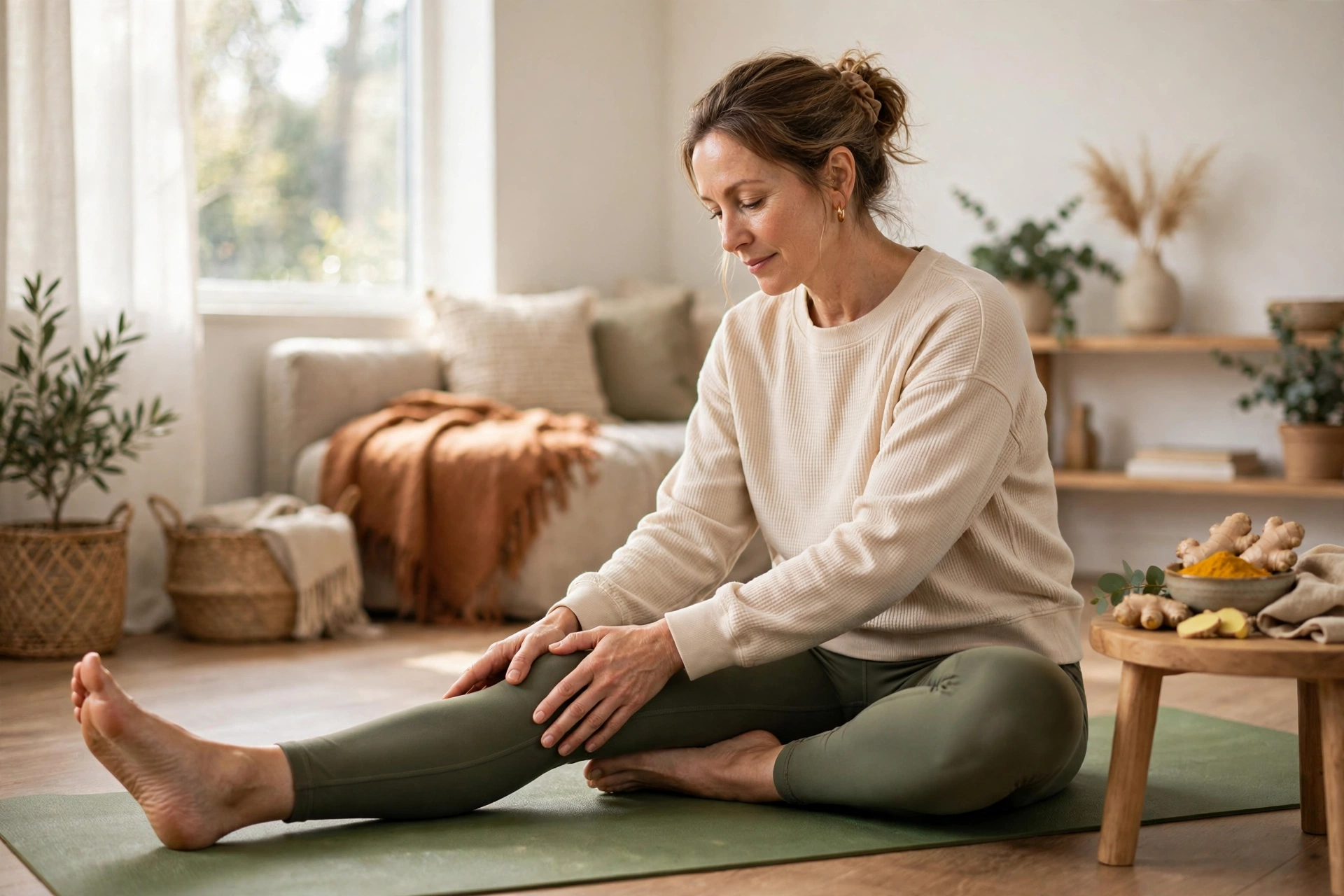
You know the feeling. You stand up after sitting for an hour, and your knee lets out a little protest — a dull ache, a stiffness that takes a few steps to shake off. Or maybe it’s the stairs. Going up is fine, but coming down feels like your knee is filing a formal complaint.
Knee pain is one of the most common complaints in the United States. Millions of people deal with it every day, from weekend runners and new parents to office workers and grandparents. The good news is that learning how to relieve knee pain naturally is very doable for most everyday aches — and you don’t need expensive gadgets or a medicine cabinet full of pills to start feeling better.
One honest note first: natural methods work best for mild to moderate knee pain — the kind that comes from overuse, stiffness, weak muscles, or early wear and tear. If your knee is swollen, hot, locked in place, or you can’t put weight on it, skip the home remedies and see a doctor. This article is about the everyday kind of knee pain, the kind most of us live with and quietly put up with.
Why Your Knees Hurt in the First Place
Your knee is the largest joint in your body, and it takes a beating. Every step you take puts roughly one and a half times your body weight through your knees. Walk down stairs and that jumps to three or four times. Run, and it’s even more.
Most everyday knee pain comes down to a few usual suspects: overuse after a sudden jump in activity, weak thigh muscles that leave the joint to absorb too much load, stiffness from sitting all day, extra weight, old injuries, and low-grade inflammation.
The encouraging part? Almost every one of these causes responds to the natural approaches below. You don’t have to fix everything at once — even two or three of these habits can make a real difference within a couple of weeks.
1. Rest — But Not Too Much Rest
When your knee hurts, the instinct is to stop moving entirely. That helps for a day or two, especially after a flare-up or a minor injury. But too much rest backfires. Muscles weaken fast, joints stiffen, and the knee actually becomes more sensitive to pain.
The sweet spot is what doctors call “relative rest.” Keep moving, but avoid the specific things that trigger sharp pain. Swap running for walking or swimming for a week. Take the elevator instead of the stairs on bad days. Use pain as a guide, not a stop sign — a little discomfort during gentle movement is normal, but sharp or worsening pain means back off.
2. Ice: The Simplest Pain Reliever There Is
Ice is boring, cheap, and genuinely effective. It reduces swelling and numbs the ache, especially after activity or when the knee feels hot and puffy.
Wrap a bag of frozen peas or an ice pack in a thin towel — never put ice directly on skin — and hold it on the knee for 15 to 20 minutes. Do this two or three times a day, especially after walking, exercising, or standing for long stretches. If the knee is stiff but not swollen, heat may feel better instead. A warm towel or a heating pad for 15 minutes before stretching can loosen things up nicely.
For many people, ice is the first step in learning how to relieve knee pain naturally.
3. Gentle Strengthening: Your Knees Need Strong Neighbors
Here’s a fact that surprises most people: the best long-term fix for knee pain isn’t a cream or a supplement. It’s stronger leg muscles. Research consistently shows that strengthening the quadriceps — the big muscles on the front of your thigh — takes pressure off the knee joint and reduces pain.
The trick is to start gently. You don’t need a gym. Three simple exercises, done a few times a week, are a solid start:
- Straight-leg raises (lie on your back, lift one straight leg a foot off the floor, hold five seconds, ten reps each side)
- Wall sits (slide down a wall until your knees bend about 45 degrees, hold 10 to 30 seconds)
- Mini squats (stand behind a chair, bend your knees slightly as if about to sit, then stand back up)
Stronger muscles are one of the most effective parts of how to relieve knee pain naturally.
4. Stretch Every Day — Even Just Five Minutes
Tight hamstrings and calves pull on the knee and change how it moves. A short daily stretch routine can take a surprising amount of pressure off the joint.
Focus on three areas: the quadriceps (front of the thigh), the hamstrings (back of the thigh), and the calves. Hold each stretch for 30 seconds and breathe normally — no bouncing. Many people find stretching after a warm shower or a short walk works best, because the muscles are already warm.
Consistency beats intensity here. Five minutes a day beats a heroic 30-minute session once a week. For a deeper look at why this matters, see our article on the benefits of stretching daily.
5. Lose a Little Weight — Even a Little Helps
This one isn’t about appearance, and it isn’t about crash diets. It’s simple physics: less weight means less pressure on your knees. Studies have found that losing just 10 pounds can take roughly 40 pounds of pressure off your knees with every step.
You don’t need a dramatic transformation. Small, sustainable changes — smaller portions, fewer sugary drinks, a daily walk — add up over months. And the knees notice the difference long before the mirror does.
Losing even a little weight is a practical part of how to relieve knee pain naturally.
6. Eat to Calm Inflammation
What you eat shows up in your joints. A diet heavy in processed foods, fried food, and added sugar tends to fuel inflammation, while certain foods actively help calm it down. This is one of the most underrated ways to relieve knee pain naturally, because it works quietly in the background every single day.
Foods that help include fatty fish like salmon and sardines, olive oil, leafy greens, berries, nuts, and spices like turmeric and ginger. Foods that tend to make inflammation worse include sugary drinks, refined white bread and pastries, processed meats, and deep-fried snacks.
You don’t need a perfect diet. Try adding one anti-inflammatory food a day and cutting back on one inflammatory one. A practical place to start is our guide on how to reduce inflammation naturally.
7. Turmeric and Ginger: The Kitchen Remedies
Turmeric’s active compound, curcumin, has been studied for joint pain, and the results are genuinely encouraging — several trials found it comparable to common over-the-counter pain relievers for knee discomfort. The catch is that curcumin isn’t absorbed well on its own. Pairing turmeric with a pinch of black pepper and a little healthy fat (like olive oil or coconut milk) improves absorption dramatically.
Ginger works along similar lines and is easier to use every day — fresh ginger in tea, grated into stir-fries, or blended into smoothies. Neither spice is a miracle cure, but as a daily habit they can take the edge off.
8. Try a Warm Epsom Salt Soak
An Epsom salt bath won’t fix a damaged knee, but it feels wonderful on stiff, achy joints. Dissolve a cup or two of Epsom salts in a warm bath and soak for 15 to 20 minutes. If a full bath isn’t practical, a warm compress — a towel soaked in warm water with a handful of Epsom salts — works on the knee directly.
A warm soak is a simple, relaxing part of how to relieve knee pain naturally.
9. Support Your Knees: Shoes and Braces
Your shoes matter more than you think. Worn-out running shoes, flat flip-flops, and high heels all change how your knee tracks when you walk. Supportive, cushioned shoes with good arch support can reduce knee pain noticeably within days.
A few practical checks: replace athletic shoes every 300 to 500 miles of use, avoid completely flat shoes for long walks, and if your feet roll inward, a drugstore insole or a podiatrist visit may help. A simple knee sleeve can also add stability and confidence during activity — useful, but not a substitute for strengthening the muscles.
Good shoes are a simple, everyday part of how to relieve knee pain naturally.
10. Low-Impact Movement: Keep the Joint Lubricated
Joints love movement. Gentle, low-impact exercise pumps fluid through the knee, nourishing the cartilage and keeping it from stiffening up. The best options are the ones you’ll actually do regularly: walking 20 to 30 minutes a day on flat ground, swimming or water aerobics, cycling on a stationary bike with low resistance, or tai chi, whose slow, controlled movements improve balance and knee stability.
The key word is “low-impact.” High-impact activities like running on concrete or jumping exercises can aggravate a sore knee, at least until the muscles around it are stronger.
That is why gentle movement is central to how to relieve knee pain naturally.
11. Massage the Muscles Around the Knee
Sometimes the pain isn’t really in the knee at all — it’s in the tight muscles pulling on it. Gently massaging the quadriceps, the calf, and the area just above and below the kneecap can release tension and improve blood flow.
You can do this yourself with your hands or a foam roller. Roll slowly over the thigh muscles for a minute or two, pausing on tender spots. Avoid pressing directly on the kneecap itself — that’s usually too sensitive.
Massage is another gentle way to support your knees while you learn how to relieve knee pain naturally.
12. Sleep and Stress: The Hidden Factors
Here’s one people rarely connect to knee pain: poor sleep and chronic stress both make pain feel worse. When you’re sleep-deprived, your pain threshold drops — the same knee ache feels bigger and harder to ignore. Stress does something similar, tightening muscles and increasing inflammation.
It sounds too simple, but protecting your sleep is genuinely part of how to relieve knee pain naturally. Aim for seven to nine hours, keep a regular bedtime, and put the phone away an hour before bed. If falling asleep is the hard part, our guide on how to fall asleep fast has practical techniques that work for most people.
How to Relieve Knee Pain Naturally: What Works Best
| Remedy | Best for | How fast it helps | Effort |
|---|---|---|---|
| Ice | Swelling and flare-ups | Minutes to hours | Low |
| Gentle strengthening | Long-term pain reduction | 2–4 weeks | Medium |
| Daily stretching | Stiffness | Days | Low |
| Anti-inflammatory foods | Ongoing low-grade pain | 2–6 weeks | Medium |
| Turmeric and ginger | Mild daily aching | 1–3 weeks | Low |
| Weight loss | Pressure-related pain | Weeks to months | Medium |
| Low-impact exercise | Stiffness and weakness | 1–2 weeks | Medium |
| Good shoes | Walking-related pain | Days | Low |
| Sleep and stress care | Pain sensitivity | 1–2 weeks | Low |
The fastest relief usually comes from ice and rest. The most lasting relief comes from strengthening, stretching, and weight management. The smartest approach is to combine a quick fix with a long-term one — ice today, strengthening this week.
A Simple 7-Day Plan to Get Started
If all twelve remedies feel like too much, here’s a realistic first week.
- Day 1: ice the knee after activity, and check your shoes.
- Day 2: start the three strengthening exercises.
- Day 3: add a 20-minute walk and a cup of ginger tea.
- Day 4: stretch for five minutes after your walk.
- Day 5: swap one processed snack for berries or nuts.
- Day 6: try an Epsom salt soak in the evening.
- Day 7: notice what changed, and keep the two or three habits that helped most.
When to See a Doctor
Natural remedies are powerful, but they have limits. See a doctor promptly if:
- the knee is swollen, red, or hot and doesn’t improve in a few days
- you can’t bear weight on the leg or the knee gives way
- the knee locks or catches painfully
- pain follows a fall, twist, or direct blow
- the pain is severe, wakes you at night, or keeps getting worse
- you have a fever along with knee pain
These can signal an injury, infection, or a condition that needs medical treatment — getting checked early usually means a simpler fix. For more on when knee pain needs medical care, see the Mayo Clinic guide to knee pain.
Frequently Asked Questions
How long does it take to relieve knee pain naturally?
Mild knee pain often improves within one to two weeks of consistent gentle exercise, icing, and stretching. Deeper issues like muscle weakness or extra weight take four to eight weeks of steady habits. If nothing has improved after six weeks, get checked by a doctor or physical therapist. That timeline is typical when learning how to relieve knee pain naturally.
Is walking good for knee pain?
Yes, for most people. Walking strengthens the muscles around the knee and keeps the joint lubricated. Start with short, flat walks of 10 to 15 minutes and build up gradually. If walking makes the pain sharply worse, shorten the distance or switch to swimming until the knee calms down.
Should I use heat or ice for knee pain?
Use ice when the knee is swollen, hot, or painful after activity. Use heat when the knee feels stiff and achy but isn’t swollen — for example, first thing in the morning or before stretching. Many people use both: heat before activity to loosen up, ice afterward to calm things down.
The Bottom Line
Knee pain is frustrating, but it’s also one of the most fixable everyday health problems. Most of the time, the answer isn’t a single magic remedy — it’s a handful of small habits working together: stronger muscles, looser joints, less inflammation, better shoes, and better sleep. Start with the two or three remedies that feel easiest, give them a couple of weeks, and build from there. These small habits add up — that is how to relieve knee pain naturally, without relying on pills.
Your knees carry you everywhere. A little care goes a long way.
Disclaimer: This article is for informational purposes only and is not medical advice. If you have a health condition or concerns, please consult a qualified healthcare professional.