








Most of us don’t think about our bones until something goes wrong — a fracture from a small fall, a stooped posture, or a doctor mentioning the words “low bone density.” But here’s the thing nobody tells you: your bones are alive. They are constantly breaking down and rebuilding themselves, and the choices you make today decide whether they stay strong or quietly weaken over the years.
The good news is that learning how to improve bone health naturally doesn’t require expensive supplements or a complicated routine. A few steady, everyday habits can make a real difference — at any age. Yes, even if you’re past 40, 50, or 60. It’s never too late to start looking after your bones, and it’s never too early either.
Why Bone Health Matters More Than You Think
Think of your bones as a savings account. In your teens and twenties, you deposit bone mass. Around age 30, you hit your peak — and from then on, you slowly start withdrawing. If you built up a good balance early, and you keep topping it up with the right habits, your bones stay strong for decades. If you didn’t, they can become thin and fragile, a condition called osteoporosis.
The scary part? Bone loss is silent. There are usually no symptoms until a bone breaks. That’s exactly why prevention matters so much — and why the small things you do every day count more than any single dramatic change.
1. Eat Enough Calcium — Every Single Day
Calcium is the main building block of bone, and your body needs a steady supply of it. Adults generally need around 1,000 mg a day, and that rises to about 1,200 mg after 50.
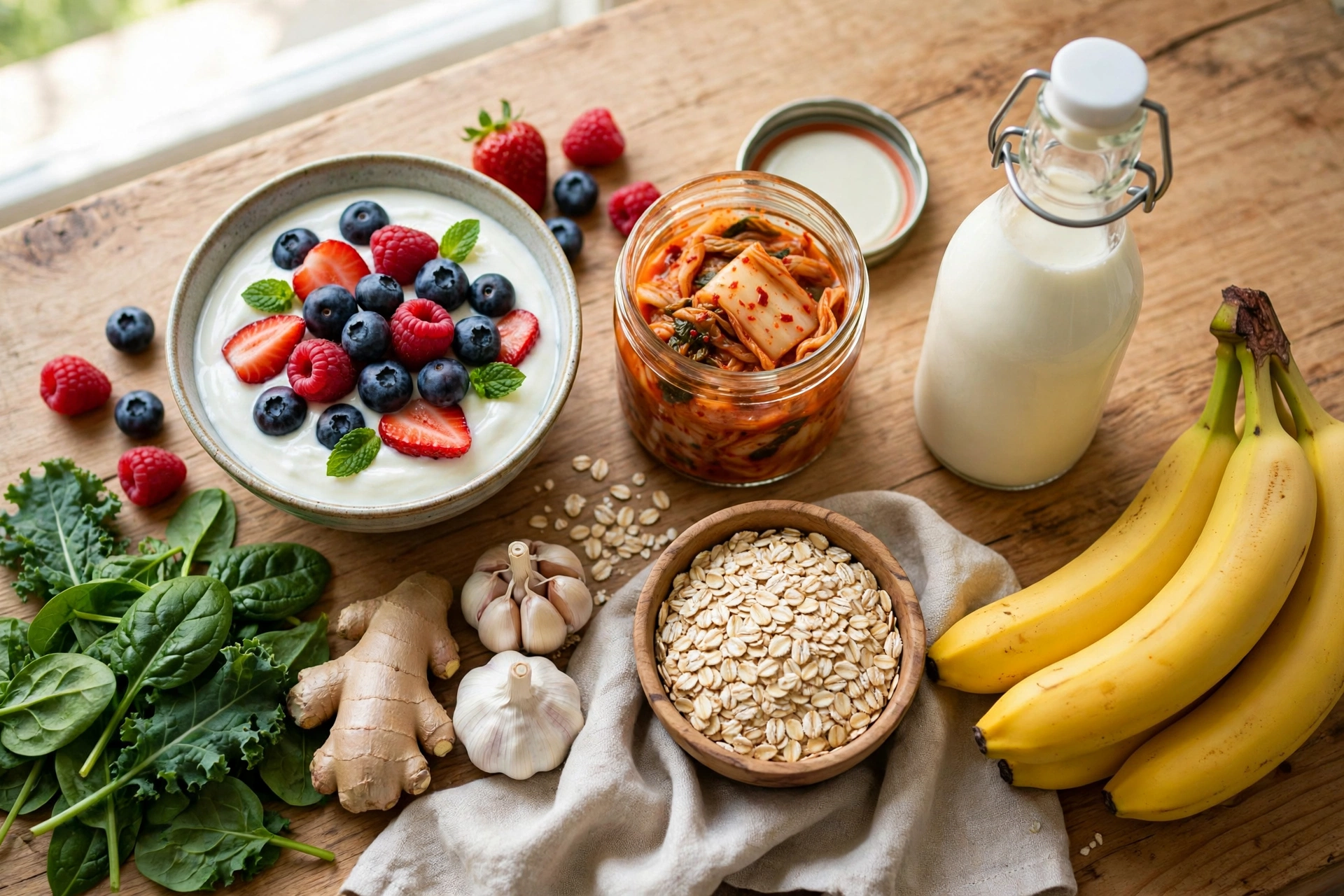
You don’t need to chug litres of milk to get there. A cup of yogurt, a handful of almonds, a serving of leafy greens like kale or broccoli, and a piece of cheese spread across the day will get you most of the way. Sardines and canned salmon (with the soft bones) are surprisingly rich in calcium too.
One practical tip: spread your calcium across meals instead of loading it all at once. Your body absorbs smaller amounts more efficiently.
2. Don’t Forget Vitamin D
Calcium without vitamin D is like bricks without cement. Vitamin D is what helps your body actually absorb the calcium you eat — without enough of it, much of that calcium simply passes through unused.
Sunlight is the easiest source. Just 10 to 20 minutes of midday sun on your face, arms and hands a few times a week helps your skin make vitamin D. Fatty fish like salmon, egg yolks, and fortified milk or cereals help too. If you spend most of your time indoors or live somewhere with long winters, it’s worth asking your doctor to check your vitamin D level.
3. Get Enough Protein
For years, protein got an unfair reputation when it came to bones. The truth is the opposite: protein is essential for bone strength. It makes up about half of your bone’s volume and helps your body absorb calcium.
Most adults do well with protein at every meal — eggs or yogurt at breakfast, lentils, chicken, fish or beans at lunch and dinner. If you’re unsure how much you personally need, our guide on how much protein you really need breaks it down in plain language.
4. Do Weight-Bearing Exercise
Your bones respond to stress the same way your muscles do — challenge them, and they grow stronger. Walking, jogging, dancing, climbing stairs, and hiking all count as weight-bearing exercise, because your bones carry your body weight against gravity.
Aim for at least 30 minutes of walking most days. It sounds almost too simple, but regular walking is one of the most underrated bone-strengthening habits there is. Even short walks after meals add up over weeks and months.
5. Add Strength Training Twice a Week
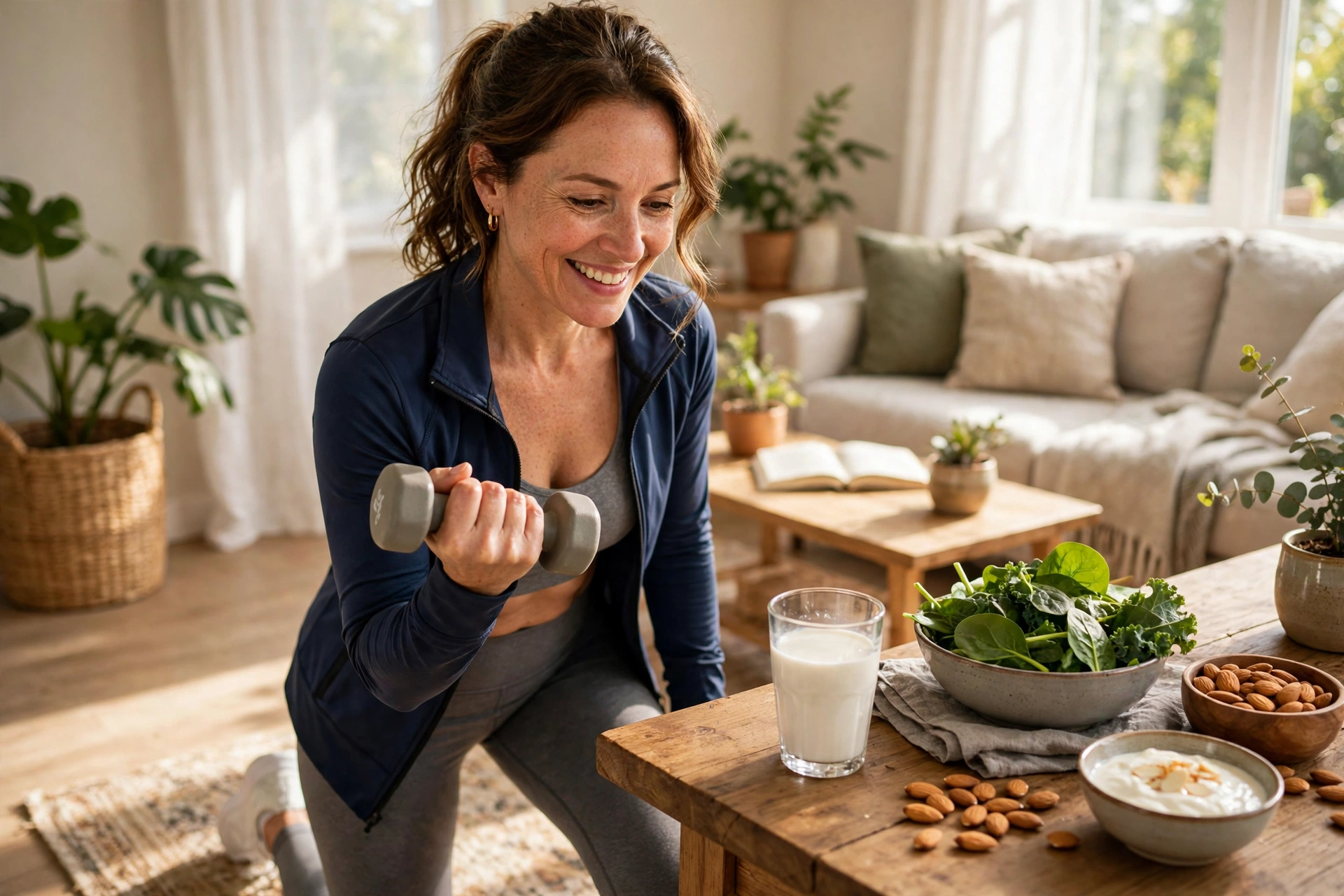
Here’s where the real magic happens. Lifting weights, using resistance bands, or doing bodyweight exercises like squats and push-ups puts targeted stress on your bones — and they respond by becoming denser and stronger.
You don’t need a gym membership or heavy weights. Two short sessions a week at home are enough to start. If you’re not sure where to begin, this beginner guide to building muscle at home without equipment is a great place to start — the same exercises that build muscle also build bone.
6. Eat Your Vegetables — Especially the Green Ones
Vegetables do more for your bones than most people realise. Leafy greens provide calcium, magnesium, potassium and vitamin K — all of which play a role in bone health. Studies have consistently found that people who eat more vegetables have stronger bones and a lower risk of fractures.
Aim to fill half your plate with vegetables at lunch and dinner. Broccoli, spinach, kale, cabbage and okra are all excellent choices. Your gut helps you absorb these nutrients too, so keeping your digestion healthy matters — our recent article on how to improve gut health naturally explains why.
7. Cut Back on Smoking and Heavy Drinking
Smoking is one of the worst things you can do for your bones. It reduces blood flow to bone tissue, interferes with calcium absorption, and lowers the hormones that protect bone. Smokers lose bone faster and break bones more easily — and they heal more slowly afterwards.
Heavy alcohol use has a similar effect, disrupting the balance between bone breakdown and bone building. If you drink, keeping it moderate — and having several alcohol-free days each week — gives your bones a much-needed break.
8. Watch Your Salt and Caffeine
This one surprises people. Too much salt makes your body excrete more calcium through urine, which means less calcium stays available for your bones. You don’t have to give up salt entirely — just ease off the processed foods, takeaways and salty snacks where most of the excess comes from.
Caffeine is similar. A cup or two of coffee a day is fine, but very heavy coffee drinking can slightly reduce calcium absorption. If you drink four or five cups a day, try swapping one or two for water or herbal tea.
9. Keep Your Balance and Protect Your Falls
Strong bones matter — but so does not falling on them. As we get older, balance exercises become just as important as strength work. Simple practices like standing on one leg while brushing your teeth, tai chi, or yoga all improve balance and coordination.
At home, keep walkways clear, wear shoes with good grip, and make sure your rooms are well lit at night. A broken hip often starts with a trip over a rug in the dark.
A Simple Daily Bone-Health Routine
If all of this feels like a lot, here’s how to improve bone health naturally in a single day:
- Morning: A calcium-rich breakfast — yogurt with fruit and a sprinkle of almonds — and a short walk in the sunlight.
- Midday: A lunch with leafy greens and a protein source, plus a glass of water instead of a third coffee.
- Evening: A 20-minute strength session twice a week, a vegetable-rich dinner, and an early night so your body can repair and rebuild.
That’s it. No magic pills, no expensive powders. Just steady, repeatable habits.
The Bottom Line: How to Improve Bone Health Naturally
Learning how to improve bone health naturally comes down to this: feed your bones well, move your body against gravity, get some sun, and avoid the habits that quietly wear bones down. You won’t feel the results tomorrow — bone changes happen slowly, over months — but in a year or two, your future self will be glad you started today.
Your bones have carried you this far. Look after them, and they’ll keep carrying you for a long time yet.
Disclaimer: This article is for informational purposes only and is not medical advice. If you have a health condition or concerns, please consult a qualified healthcare professional.