








Walk down any supermarket aisle and you’d think protein is the answer to everything — protein bars, protein oats, even protein coffee. It’s hard to know what’s real advice and what’s just marketing. So let’s answer the one question that actually matters: how much protein do you need?
The short answer: probably less than fitness influencers tell you, but more than most of us actually eat. The right number depends on your weight, how active you are, and what you’re trying to do with your body.
Why Protein Matters So Much
Protein isn’t just for bodybuilders. It’s the building material your body uses for almost everything. Your muscles, skin, hair, hormones, and immune cells are all built — and constantly rebuilt — from protein.
Here’s the part most people miss: your body doesn’t store protein the way it stores fat or carbs. There’s no reserve tank. So you need a steady supply from food every day — skip it for a while and your body starts breaking down muscle to get what it needs. Not overnight, just a slow drain that shows up as weaker muscles, slower recovery, and unexplained tiredness.
Protein also keeps you full. A breakfast with eggs will hold you until lunch far better than a plain bagel, even if the calories are the same. That’s why the question of how much protein do you need isn’t just a gym question — it matters for anyone who wants steady energy and a healthy weight.
How Much Protein Do You Need Each Day?
The official recommended daily allowance is 0.8 grams per kilogram of body weight — about 56 grams a day for a 70 kg person. But that’s a minimum to avoid deficiency, not the amount for feeling and performing your best. Most experts now suggest these ranges instead:
- If you’re mostly sedentary: 1.0 to 1.2 grams per kilogram of body weight per day
- If you’re moderately active: 1.2 to 1.6 grams per kilogram
- If you lift weights or train hard: 1.6 to 2.0 grams per kilogram
- If you’re over 60: aim for 1.2 to 1.6 grams per kilogram — older bodies use protein less efficiently
- If you’re trying to lose weight: 1.6 to 2.0 grams per kilogram helps protect your muscle while the fat comes off
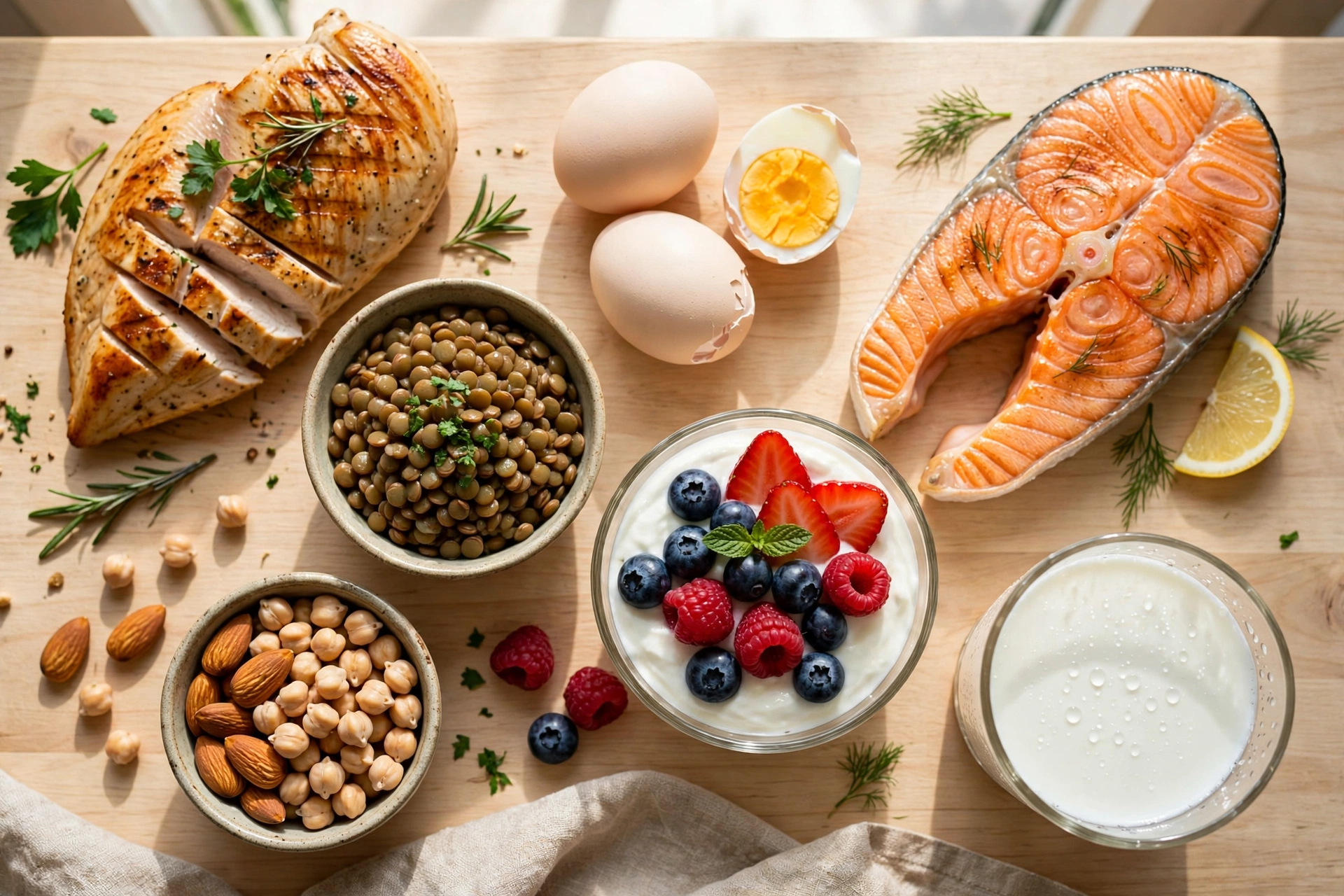
So how much protein do you need if you weigh 70 kg and go to the gym three times a week? Somewhere around 110 to 140 grams a day. That sounds like a lot — until you realise a chicken breast has about 30 grams, a cup of Greek yogurt has 15 to 20, and two eggs give you 12.
How to Work Out Your Own Number
Forget the calculators. Here’s the quick version:
- Take your weight in kilograms (pounds divided by 2.2).
- Multiply it by the number that matches your life — 1.2 if you’re lightly active, 1.6 if you train regularly.
- That’s your daily target in grams.
A 60 kg person who walks daily might aim for 72 to 96 grams; an 85 kg person training for strength, 135 to 170 grams. These are targets, not rules carved in stone — some days you’ll be under, some over, and that’s fine. What matters is the weekly average. Revisit how much protein do you need whenever your weight or training changes, and adjust your target from there.
One more thing: your body can only use roughly 25 to 40 grams per meal for muscle building, so spreading it across the day beats cramming it all into one giant dinner.
Signs You Might Not Be Getting Enough
Low protein creeps in quietly. Watch for these signs:
- You’re hungry again an hour after eating. Meals without protein digest fast and leave you hunting for snacks.
- Your workouts leave you sore for days. Protein repairs muscle after exercise — without enough of it, recovery drags.
- Your hair is thinning or your nails break easily. Both are made almost entirely of protein.
- You catch every cold going around. Your immune system runs on protein, too.
- You’re losing weight but feeling weaker, not fitter. That can mean you’re losing muscle along with fat.
None of these signs alone proves a protein problem — but if two or three sound familiar, it’s worth looking at what you’re actually eating for a few days.
Easy Ways to Get More Protein Without Overthinking It
A few small swaps do most of the work:
- Start the day with protein. Eggs instead of sugary cereal, or Greek yogurt instead of flavoured milk.
- Make every meal carry some protein. A palm-sized portion of chicken, fish, beans, or tofu at lunch and dinner covers most of your target.
- Snack smarter. A handful of nuts, a boiled egg, or a small pot of cottage cheese beats crisps for staying power.
- Add lentils or beans to dishes you already make. They slide into soups, curries, and salads without changing the meal.
- Don’t forget plant sources. Lentils, chickpeas, tofu, tempeh, and quinoa all pack serious protein — you don’t need meat at every meal.
If you eat meat, fish, eggs and dairy, hitting your target isn’t hard. If you’re vegetarian or vegan it takes a little more planning, but beans, lentils, soy foods and whole grains get you there.
For ideas on timing your meals around training, see our guide on what to eat before and after a workout.
Do You Need Protein Powder?
Probably not — but it can help. Powder is just convenient food, not magic. If you struggle to hit your target with regular meals, a scoop in a smoothie is an easy fix, and whey, pea, and soy powders all work fine. If you already know how much protein do you need each day, a scoop can simply fill the gap.
You don’t need three shakes a day. Real food gives you fibre, vitamins, and minerals powder doesn’t — think of the shake as a backup, not the foundation.
And check the label on protein bars — many are candy bars with a sprinkle of protein and a long list of sweeteners. If it tastes like dessert, it probably is.
Common Protein Mistakes
- Eating almost no protein at breakfast, then overloading at dinner. Spread it out and you’ll feel the difference within a week.
- Thinking more is always better. Very high intakes don’t build extra muscle — the excess just gets used as energy. Unless you’re an athlete, there’s no prize for 250 grams a day.
- Forgetting that protein helps weight loss. When people try to lose belly fat naturally, they often cut calories hard and cut protein too. That’s backwards — protein is what keeps you full and protects your muscle while you lose fat.
- Ignoring hydration. Higher protein works best with enough water, so keep a bottle nearby.
Getting enough protein can also help boost your metabolism, since your body burns more calories digesting protein than it does digesting carbs or fat.
The Bottom Line
So, how much protein do you need? For most adults, 1.2 to 1.6 grams per kilogram of body weight is a sensible target — a little more if you train hard, are losing weight, or are older. Spread it across your meals, favour real food over supplements, and don’t stress about hitting the number perfectly every day.
Protein isn’t complicated once you strip away the marketing. Eat a palm-sized portion at each meal, add a protein-rich snack when you’re hungry, and you’ve probably already solved it.
Disclaimer: This article is for informational purposes only and is not medical advice. If you have a health condition or concerns, please consult a qualified healthcare professional.