








If your stomach feels bloated after most meals, your energy crashes for no clear reason, or your digestion just feels “off,” your gut might be trying to tell you something. And honestly, it’s worth listening.
Your gut is home to trillions of bacteria — the gut microbiome — and these tiny organisms influence far more than digestion. They affect your immune system, your mood, your skin, and even how well you sleep. The good news? You don’t need expensive supplements or a drastic diet overhaul to support them. Small, everyday habits make a real difference.
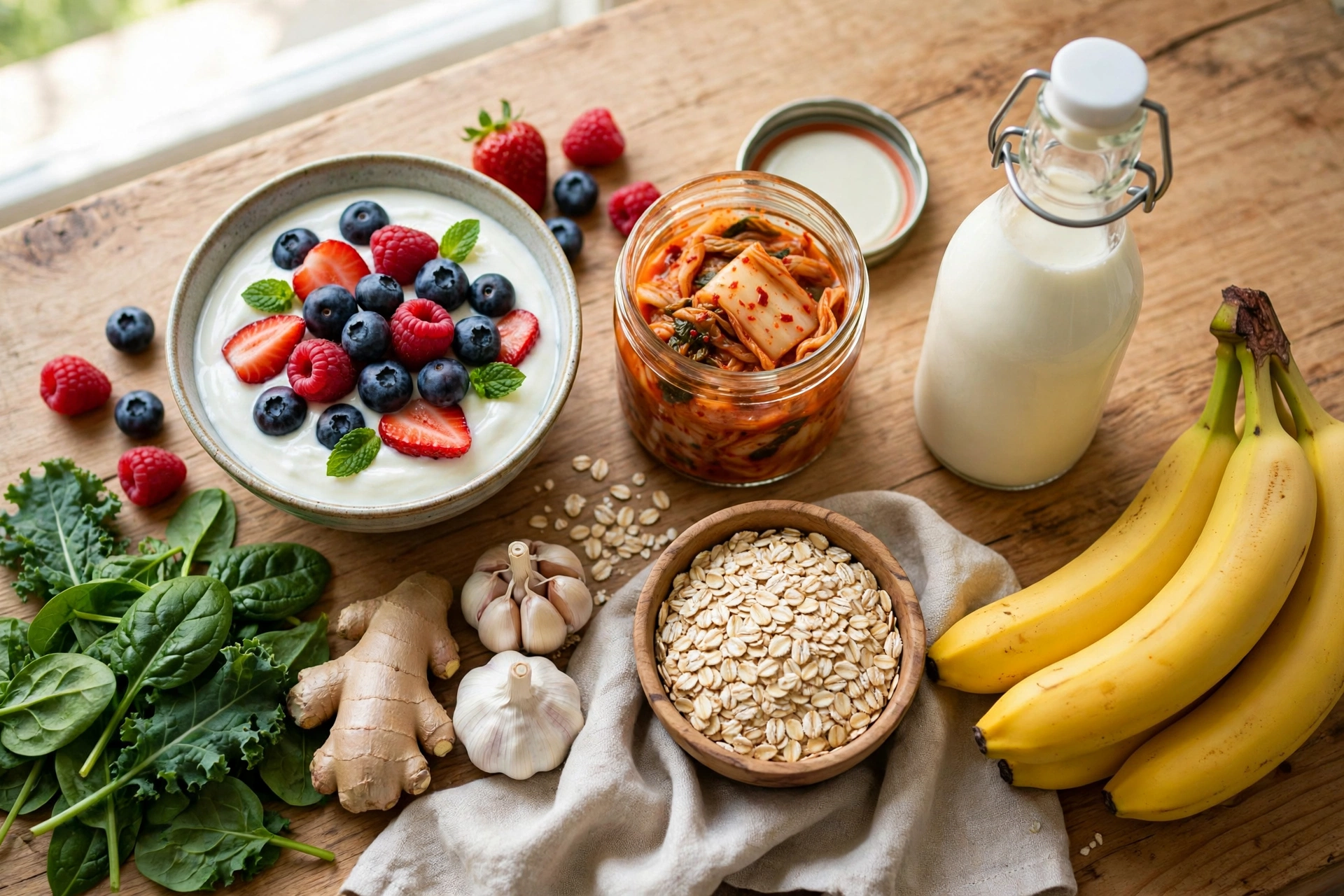
Here is how to improve gut health naturally, one realistic step at a time.
1. Eat More Fiber — Slowly
Fiber is the favorite food of your good gut bacteria. When they ferment fiber, they produce short-chain fatty acids that keep your gut lining strong and inflammation low.
Most people eat far less fiber than they need. Aim for a mix of soluble fiber (oats, beans, apples, lentils) and insoluble fiber (whole grains, vegetables, skins of fruit). The key word is slowly — jumping from 10 grams to 35 grams overnight is a recipe for gas and bloating. Add one high-fiber food every few days and let your gut adjust.
A bowl of oatmeal with berries at breakfast and a lentil soup at lunch can quietly add 10–12 grams without any effort at all. If you want a deeper look at fiber, read our guide on eat more fiber.
2. Add Fermented Foods to Your Week
Fermented foods are a natural source of probiotics — live, friendly bacteria that help balance your microbiome. You don’t need a special brand or a fancy jar. Everyday options work:
- Plain yogurt or kefir
- Kimchi or sauerkraut
- Miso and tempeh
- Pickles fermented in brine (not vinegar)
A small serving a few times a week is enough. Think of it as topping up your gut’s good bacteria rather than flooding it.
3. Drink Enough Water
Water keeps everything moving — literally. It helps fiber do its job, supports the mucus lining of your intestines, and prevents constipation, which is one of the fastest ways to feel sluggish and bloated.
Carry a bottle and sip through the day instead of gulping a litre at once. Most adults do well with around 2 to 2.5 litres a day, more if you exercise or live somewhere hot. Our practical guide on how much water you should really drink breaks it down by lifestyle.
4. Cut Back on Ultra-Processed Food
Nobody is saying you can never eat crisps or a takeaway again. But a diet built mostly on ultra-processed food — sugary drinks, packaged snacks, instant noodles, processed meats — feeds the wrong kind of bacteria and starves the good ones.
A simple rule that works for most people: if most of what you eat could have grown, swum, or been picked, your gut is probably happy. Keep the processed stuff as the exception, not the foundation.
5. Manage Stress (Your Gut Feels It Too)
Ever had butterflies before a big moment, or a stomach ache during a stressful week? That’s the gut-brain axis at work — your gut and brain talk constantly through the vagus nerve. So learning how to improve gut health naturally also means looking after your stress, not just your plate.
Chronic stress slows digestion, increases gut sensitivity, and can throw your microbiome out of balance. You don’t need an hour of meditation a day. Five slow breaths before a meal, a short walk after lunch, or writing down what’s on your mind in the evening can all lower the load. Our guide on 5 simple breathing exercises to calm stress in minutes is a good place to start.
6. Sleep 7 to 8 Hours
Your gut bacteria follow a rhythm, just like you do. Irregular sleep and late nights disrupt that rhythm, and studies link poor sleep with a less diverse microbiome.
Keep a fairly regular bedtime, even on weekends, and give yourself a screen-free wind-down of at least 30 minutes. If falling asleep is the hard part, our tips on how to fall asleep fast can help.
7. Move Your Body Every Day
You don’t need a gym membership to help your gut. Regular movement speeds up digestion, reduces bloating, and increases the diversity of gut bacteria.
A 20–30 minute walk after meals is one of the simplest and most underrated habits there is. If you’re wondering how to improve gut health naturally without spending a penny, this walk is the best place to start. Gentle movement like yoga or stretching counts too — and if you want a routine, our guide to the benefits of stretching daily is a gentle place to begin.
8. Don’t Overuse Antibiotics or Painkillers
Antibiotics save lives, and sometimes you genuinely need them — take them when your doctor prescribes them. But unnecessary courses wipe out good bacteria along with the bad. The same goes for frequent use of painkillers like ibuprofen, which can irritate the gut lining.
The takeaway is simple: use medicines when needed, not casually, and after a course of antibiotics, focus on fiber, fermented foods, and plenty of water to help your gut recover.
9. Eat Slowly and Chew Properly
Digestion starts in your mouth, not your stomach. Chewing food well breaks it into smaller pieces and mixes it with enzymes, so your gut has less work to do.
Try putting your fork down between bites. It sounds trivial, but people who eat slowly report less bloating and fewer stomach aches — and they tend to notice fullness before overeating.
10. Try a Prebiotic Food Every Day
Prebiotics are the fibers that feed your good bacteria — think of them as fertilizer for your gut garden. Great sources include:
- Garlic, onions, and leeks
- Bananas (slightly green ones are best)
- Asparagus and artichokes
- Oats and barley
One prebiotic food a day is an easy habit to keep. A banana with breakfast or garlic in your dinner covers it.
How Long Does It Take to See a Difference?
If you are learning how to improve gut health naturally, most people notice small changes — less bloating, more regular digestion — within two to three weeks of consistent habits. Bigger shifts in the microbiome take longer, usually six to eight weeks. That’s normal. Your gut didn’t get out of balance overnight, and it won’t rebalance overnight either.
The best approach is the boring one: pick two or three habits from this list, stick with them for a month, and then add more. Consistency beats intensity every single time.
The Bottom Line: How to Improve Gut Health Naturally
Learning how to improve gut health naturally isn’t about a miracle food or a 30-day cleanse. It’s about feeding the good bacteria, giving them water and movement, keeping stress and processed food in check, and sleeping well. Do that most days, and your gut will return the favour — better digestion, steadier energy, and a body that just feels easier to live in.
Start with one habit today. Your gut will notice.
Disclaimer: This article is for informational purposes only and is not medical advice. If you have a health condition or concerns, please consult a qualified healthcare professional.