








You can’t see it, and most days you can’t feel it either. But low-grade, chronic inflammation may be quietly working against you — showing up as stiff joints in the morning, that foggy-headed feeling by mid-afternoon, or just a general sense that your body isn’t bouncing back the way it used to. Learning how to reduce inflammation naturally starts with understanding that quiet process.
Here’s the thing: inflammation isn’t the enemy. When you cut your finger or catch a cold, inflammation is your body doing exactly what it’s supposed to do — rushing help to the problem and starting the repair. The trouble starts when that alarm never switches off. Months of stress, poor sleep, too much processed food and too little movement can keep your immune system on low alert all the time, and over the years that slow burn is linked to heart disease, type 2 diabetes, and achy joints.
The good news? You don’t need an expensive supplement stack or a total life overhaul to learn how to reduce inflammation naturally. A handful of small, consistent habits — the kind you can actually stick to — can make a real difference. Let’s walk through ten of them.
1. Fill Half Your Plate With Plants
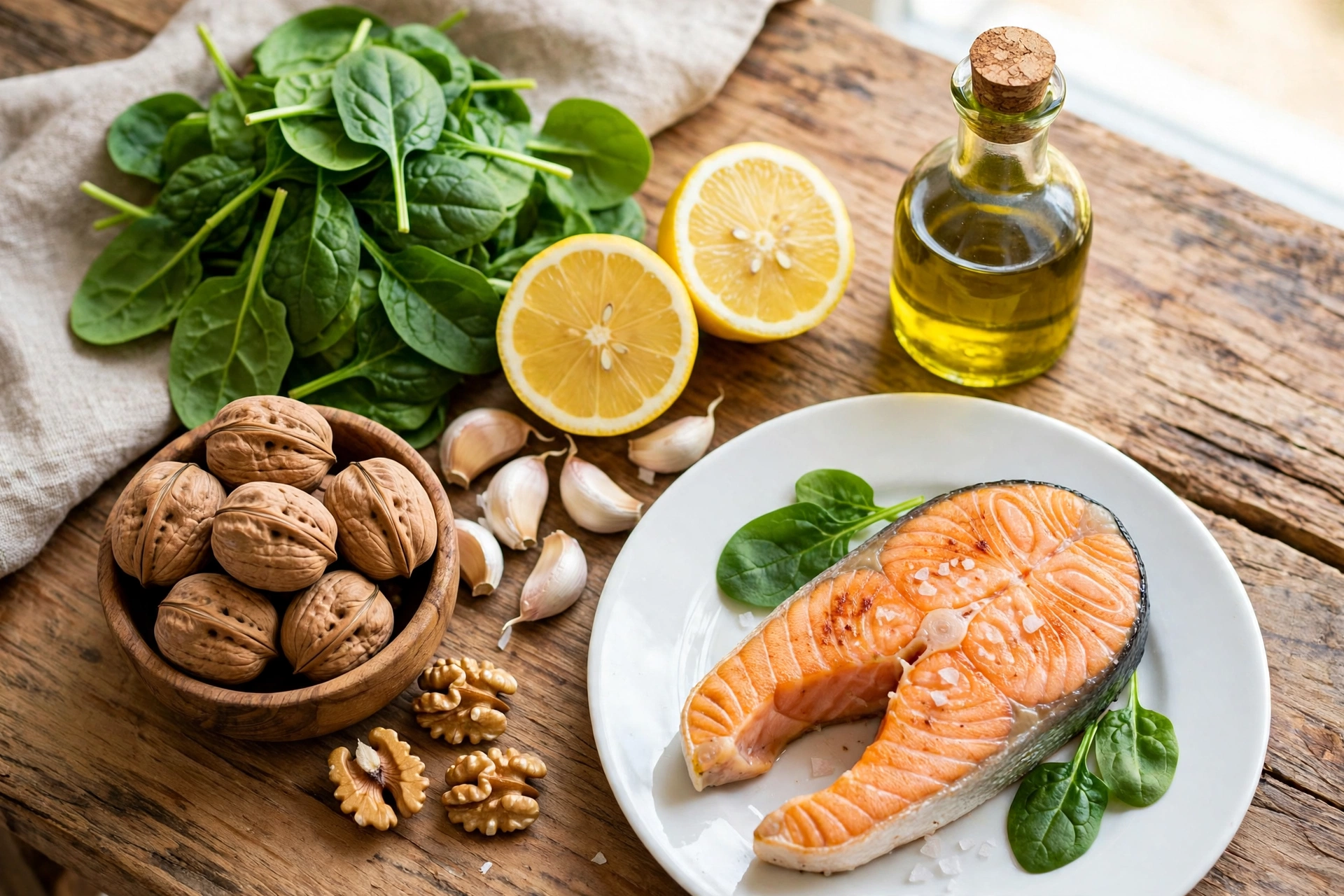
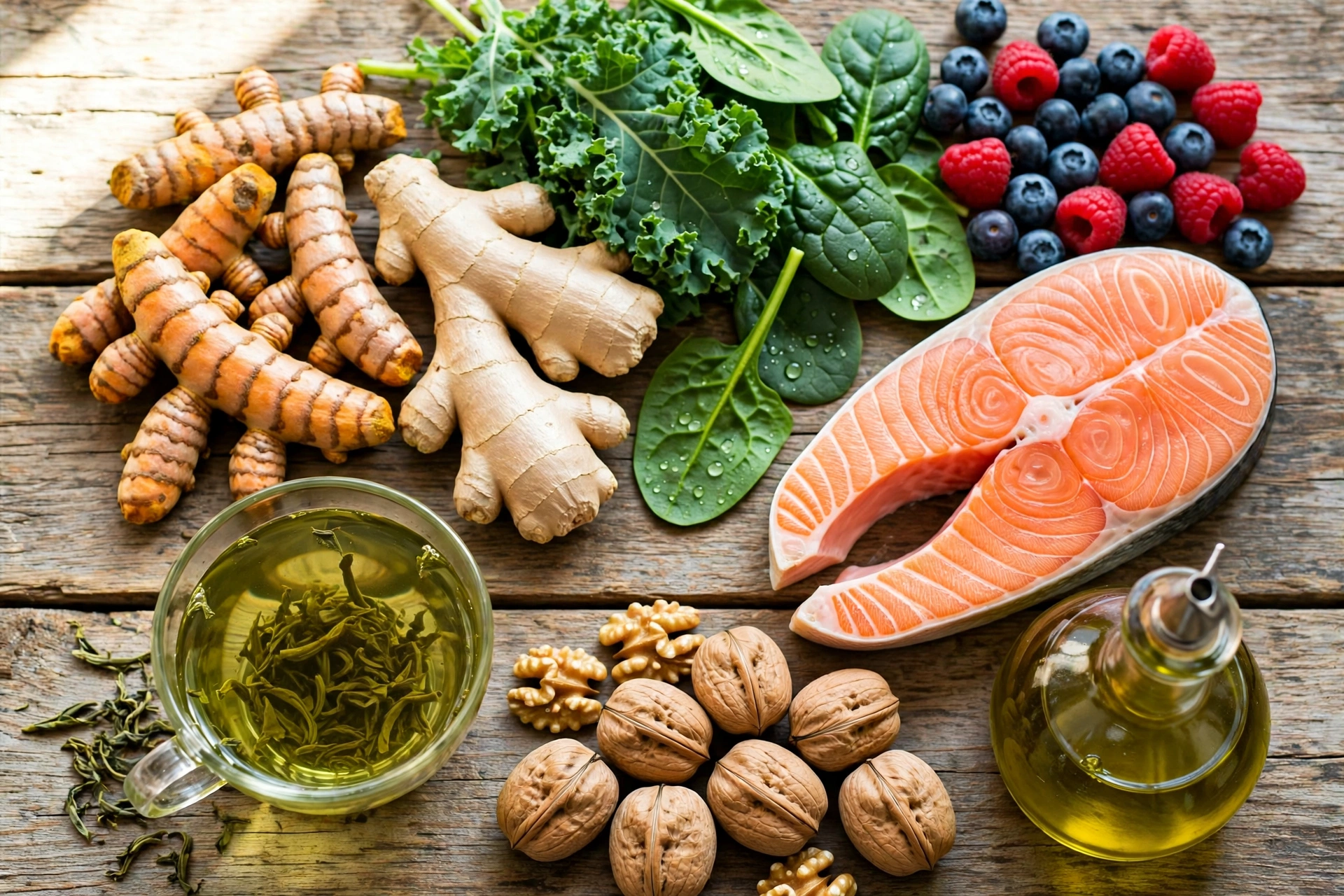
If you only change one thing, make it this. Fruits, vegetables, beans, whole grains, nuts and seeds are packed with antioxidants and polyphenols — compounds that actively help calm inflammation. Berries, leafy greens, broccoli and tomatoes are especially strong players.
You don’t have to become a salad person overnight. Start smaller: add a handful of spinach to your eggs, swap one snack a day for a piece of fruit, or toss a cup of berries into your breakfast. The goal is colour and variety, not perfection.
2. Eat More Omega-3s (and Fewer Fried Foods)
Omega-3 fatty acids — found in oily fish like salmon, sardines and mackerel, as well as flaxseeds, chia seeds and walnuts — are some of the best-studied natural anti-inflammatories out there. Aim for two servings of oily fish a week, or a daily spoonful of ground flaxseed in your porridge or smoothie if fish isn’t your thing.
On the flip side, foods fried in refined oils, fatty processed meats and ultra-processed snacks tend to push inflammation in the wrong direction. You don’t have to ban them forever. Just make them the exception, not the everyday.
3. Spice Things Up — Literally
Your spice rack is quietly doing more for you than you think. Turmeric (thanks to its active compound, curcumin) and ginger both have well-documented anti-inflammatory effects. A pinch of turmeric in rice, a thumb of fresh ginger in a stir-fry or a cup of ginger tea can all add up over time.
A practical tip: curcumin absorbs much better with a little black pepper and healthy fat, so that classic turmeric latte with a pinch of pepper isn’t just a trend — it’s good chemistry.
4. Cut Back on Added Sugar — Gradually
Nobody likes being told to quit sugar, so let’s be honest: you don’t have to. But consistently high sugar intake is one of the most reliable drivers of chronic inflammation. The trick is to cut back without feeling deprived.
Start with the easy wins. Swap sugary drinks for water or sparkling water with lemon — that’s often the single biggest source of added sugar in a day. Then look at the hidden sugar in breakfast cereals, sauces and flavoured yoghurts. Small cuts, made one at a time, are far more sustainable than a dramatic cold-turkey attempt that lasts three days.
If you want a realistic plan for this, our guide on how to quit sugar in 21 days walks through it step by step.
5. Move Your Body Every Day — Gently Counts
You don’t need to run a marathon or join a gym to learn how to reduce inflammation naturally. Regular, moderate movement — a brisk 30-minute walk, a gentle bike ride, a few stretches — lowers inflammatory markers in the body. The key word is regular. A short walk every day beats a heroic workout once a week.
If you’re starting from scratch, try this: after each meal, walk for ten minutes. It helps your blood sugar, your digestion and your joints all at once — and it’s genuinely hard to talk yourself out of ten minutes. For more on why this works, see why walking after meals is the easiest health habit you’re not doing.
6. Prioritise Sleep Like It’s Medicine
Poor sleep and inflammation feed each other in a vicious loop. One bad night raises inflammatory markers the next day, and that inflammation then makes it harder to sleep well the following night. Breaking the cycle starts with the basics: a consistent bedtime, a cool dark room, and screens off at least 30 minutes before bed.
If your mind races at night, try a simple wind-down routine — a warm shower, a few pages of a book, or slow breathing. Nothing fancy. Your body does most of its repair work while you sleep, so protecting those seven to nine hours is one of the most anti-inflammatory things you can do.
7. Manage Stress Before It Manages You
Chronic stress keeps cortisol elevated, and over time that throws your immune system off balance and fuels inflammation. You can’t eliminate stress — and you don’t need to. You just need a reliable way to release it.
What works is personal. For some people it’s a ten-minute walk outside. For others, it’s journaling, prayer, talking to a friend, or a few minutes of slow breathing.
The research is clear that even brief daily practices, like the ones in our breathing exercises to calm stress, can measurably lower stress hormones. Pick one thing, do it daily, and treat it as non-negotiable as brushing your teeth.
8. Drink Enough Water
It sounds almost too simple to matter, but dehydration makes everything worse — including inflammation. Water helps flush waste products, keeps your joints lubricated, and supports your kidneys in doing their cleanup work. Aim for around 6–8 glasses a day, more if it’s hot or you’ve been exercising.
Keep a bottle on your desk or in your bag so you don’t have to remember — you just sip. Our practical hydration guide explains how much you actually need and how to tell if you’re getting enough.
9. Look After Your Gut
Your gut and your immune system are deeply connected — a large share of your immune cells live in and around your gut. When your gut microbiome is out of balance, inflammation tends to follow. The fix is pleasantly boring: eat plenty of fibre, include fermented foods like yoghurt, kefir or pickles a few times a week, and go easy on the ultra-processed stuff.
If you want a deeper dive into this, our article on how to improve gut health naturally covers the practical steps in detail. A healthy gut is one of the most overlooked parts of learning how to reduce inflammation naturally.
10. Keep a Healthy Weight — Slowly, Not Desperately
Excess body fat, particularly around the waist, isn’t just stored energy — fat tissue actively produces inflammatory chemicals. That means even modest, gradual weight loss can lower inflammation noticeably. The emphasis is on gradual: crash diets spike stress hormones and are nearly impossible to sustain.
Focus on the habits in this list — the same habits that show you how to reduce inflammation naturally — rather than the number on the scale, and the weight tends to follow. If you’d like a place to start, our guide on how to lose belly fat naturally lays out science-backed habits that actually work.
A Simple Way to Start: How to Reduce Inflammation Naturally
Ten habits is a lot to take in at once, and nobody expects you to do all of them by tomorrow. Pick the two that feel easiest — maybe the post-meal walk and the extra glass of water — and do those every day for two weeks. Then add one more. Small steps, repeated daily, are how to reduce inflammation naturally. Your body notices consistency far more than intensity.
And remember: these habits support your health, but they don’t replace medical care. If you have ongoing pain, swelling, or a diagnosed inflammatory condition, work with your doctor on a plan that’s right for you.
Disclaimer: This article is for informational purposes only and is not medical advice. If you have a health condition or concerns, please consult a qualified healthcare professional.