









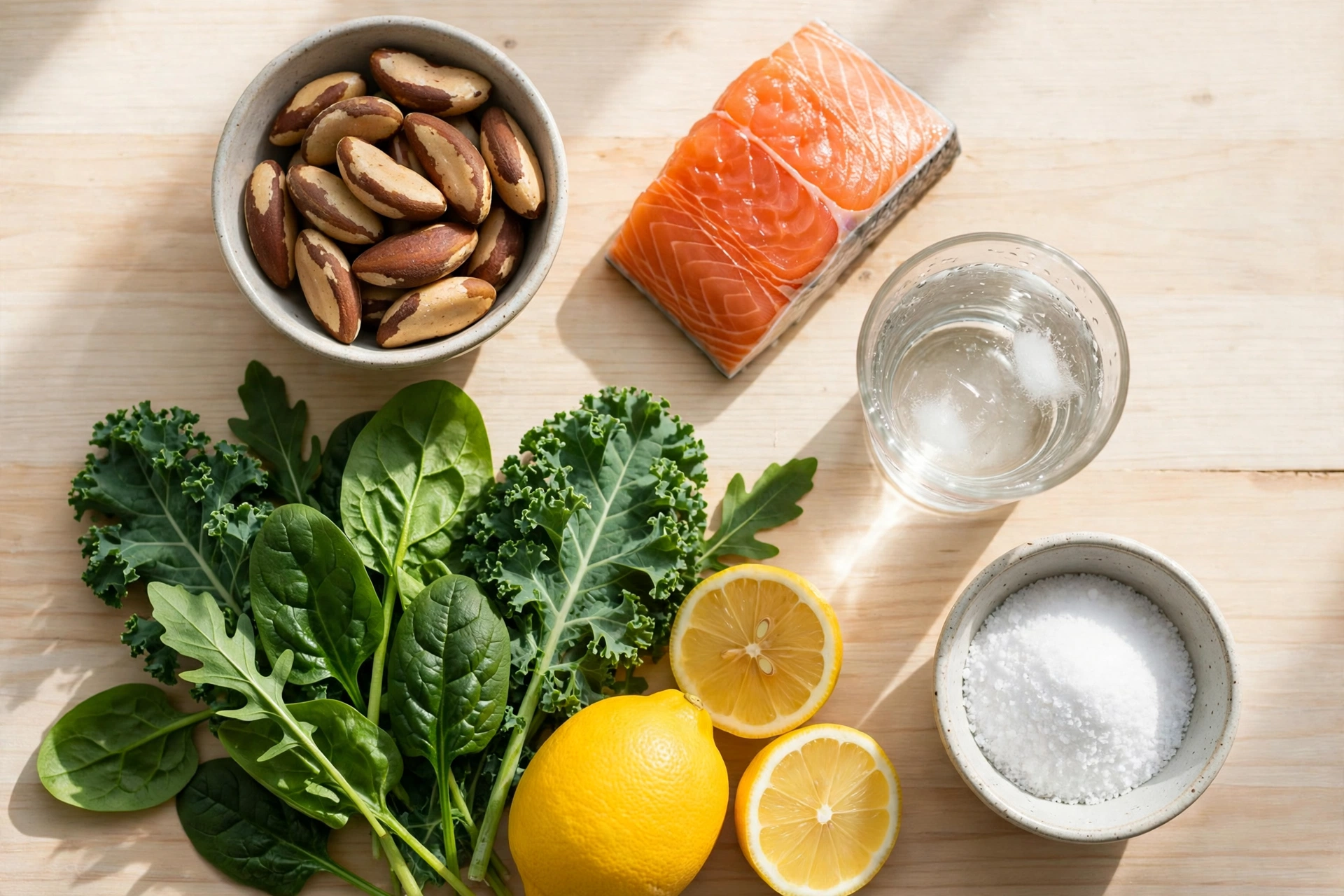
Your thyroid is a small, butterfly-shaped gland at the base of your neck, and it punches far above its weight. It controls how fast your body burns energy, how warm you feel, how steady your mood is, and even how well you sleep. When it works well, you barely notice it. When it doesn’t, everything feels off — your energy dips, your weight shifts for no clear reason, and your brain feels foggy.
If you’re wondering how to improve thyroid health naturally, the good news is that everyday habits make a real difference. No single food or supplement will fix a thyroid problem on its own, but the way you eat, sleep, move, and handle stress all feed directly into how well this little gland works. Here are 12 practical habits that support your thyroid — things you can start today.
What Does Your Thyroid Actually Do?
Think of your thyroid as your body’s thermostat and speed dial rolled into one. It makes hormones — mainly thyroxine (T4) and triiodothyronine (T3) — that tell nearly every cell in your body how fast to work. Those hormones influence your heart rate, body temperature, digestion, muscle strength, and even how quickly your brain processes thoughts.
Your thyroid doesn’t work alone. The pituitary gland in your brain sends it a signal called TSH (thyroid-stimulating hormone) that tells it when to make more or less hormone. It’s a feedback loop, like a thermostat in your home: when hormone levels drop, TSH rises to nudge the thyroid along, and when levels are high, TSH drops back down. That’s why a blood test for TSH is usually the first thing a doctor checks when thyroid trouble is suspected.
Signs Your Thyroid Might Need Some Support
Thyroid problems are common — around 20 million Americans live with some form of thyroid disease, and many don’t even know it. The symptoms can be vague, which is why they’re so easy to miss. Here are some signs worth paying attention to:
- Constant tiredness, even after a full night’s sleep
- Unexplained weight gain or weight that’s suddenly hard to lose
- Feeling cold all the time, especially in your hands and feet
- Dry skin, thinning hair, or brittle nails
- A slower heart rate, or a racing one that won’t settle
- Low mood, anxiety, or trouble concentrating
- Constipation that doesn’t respond to diet changes
- Irregular or heavier periods
These symptoms can come from many causes, so they don’t automatically mean your thyroid is the problem — but if several sound familiar, ask your doctor for a thyroid blood test. Lifestyle habits help enormously, but they work best alongside proper medical care, not instead of it.
How to Improve Thyroid Health Naturally: 12 Habits That Actually Work
1. Get Enough Iodine — But Not Too Much
Iodine is the raw material your thyroid uses to make hormones, so getting too little of it can slow the whole system down. In the United States, iodized table salt has mostly solved iodine deficiency, but if you only use sea salt or Himalayan pink salt — neither of which is reliably iodized — you may be getting less than you think. A pinch of iodized salt in cooking, plus foods like eggs, dairy, and seafood, usually covers it. Just don’t go overboard: very large doses of iodine from supplements or seaweed snacks can actually upset the thyroid, so more is not better here.
2. Eat Selenium-Rich Foods
Selenium is a trace mineral your thyroid needs to convert T4 into the more active T3 hormone, and the thyroid holds more selenium per gram than almost any other organ. The easiest way to get it is food. Just two Brazil nuts a day provide more than your daily requirement — but stick to one or two, because selenium is one of those nutrients where too much is genuinely harmful. Other good sources include tuna, sardines, eggs, sunflower seeds, and mushrooms. A varied diet usually covers selenium without any supplement at all.
3. Don’t Skip Zinc
Zinc works hand in hand with selenium in thyroid hormone production, and low zinc levels have been linked with sluggish thyroid function. Oysters are the richest source by far, but pumpkin seeds, chickpeas, lentils, yogurt, and lean beef all contribute. If you eat mostly plant-based meals, pay a little extra attention here — soaking beans and lentils before cooking helps your body absorb more of the zinc they contain.
4. Prioritize Protein at Every Meal
Your thyroid hormones are built from an amino acid called tyrosine, which comes from protein. A low-protein diet can quietly drag thyroid function down, and it also makes it harder to keep muscle, which matters because muscle keeps your metabolism burning. Aim for a palm-sized portion of protein at each meal: eggs in the morning, chicken or fish at lunch, beans or Greek yogurt at dinner. If you want a deeper look at how protein affects your energy and weight, our guide on how to boost your metabolism naturally covers the connection in more detail.
5. Sleep 7 to 9 Hours a Night
Your thyroid and your sleep are tightly linked. Poor sleep raises stress hormones and disrupts the nightly rhythm of TSH, while an underactive thyroid can make you feel exhausted no matter how long you sleep. Breaking that cycle starts with the basics: a regular bedtime, a cool dark room, and no screens for the last 30 minutes before bed.
6. Manage Stress Every Single Day
Chronic stress is one of the most underrated threats to thyroid health. When you’re stressed, your body produces more cortisol, and high cortisol can interfere with the conversion of T4 to active T3. Stress also makes autoimmune thyroid conditions more likely to flare. You don’t need an hour of meditation to make a difference — five slow breaths before a meeting, a ten-minute walk after lunch, or writing down three worries before bed all count. For a full toolkit, see our article on how to manage stress naturally.
7. Move Your Body Every Day
Exercise supports your thyroid in two ways: it improves how your cells respond to thyroid hormones, and it helps with weight, mood, and sleep — the three things thyroid problems hit hardest. You don’t need intense workouts. A brisk 30-minute walk, a short swim, or gentle yoga all help, and strength training twice a week adds muscle that keeps your metabolism steady. The best exercise for your thyroid is the one you’ll actually do tomorrow, so pick something you enjoy rather than something you dread.
8. Cut Back on Ultra-Processed Foods
Heavily processed foods — sugary drinks, packaged snacks, fast food — tend to be high in calories and low in the nutrients your thyroid actually needs, like iodine, selenium, and zinc. They also promote inflammation, and inflammation is closely tied to autoimmune thyroid conditions like Hashimoto’s. You don’t have to eat perfectly. Swapping one processed snack a day for something whole — an apple with peanut butter, a handful of nuts, a boiled egg — is a realistic start that genuinely adds up over months.
9. Be Smart About Soy and Cruciferous Vegetables
You’ve probably heard that soy and vegetables like broccoli, kale, and cauliflower are “bad for your thyroid.” The truth is more nuanced. These foods contain compounds called goitrogens that can interfere with iodine uptake — but mainly when eaten raw in very large amounts by someone who is already iodine-deficient. For most people, normal portions of cooked broccoli or a serving of tofu are fine, because cooking reduces goitrogens significantly. There’s no reason to ban these healthy foods entirely.
10. Stay Hydrated
It sounds almost too simple, but dehydration makes every thyroid symptom feel worse: fatigue, brain fog, constipation, dry skin. Water helps your body transport thyroid hormones and supports the metabolism they regulate. Keep a bottle at your desk and aim for roughly eight glasses a day, more if you exercise or live somewhere hot. Herbal tea counts too. If plain water bores you, add lemon or cucumber — the habit matters more than the flavor.
11. Quit Smoking and Limit Alcohol
Smoking is directly linked to thyroid disease. It increases the risk of Graves’ disease (an overactive thyroid condition) and makes thyroid eye disease worse. Alcohol is less direct, but heavy drinking disrupts sleep, stresses the liver — which helps convert thyroid hormones — and adds empty calories that make weight management harder. If you smoke, quitting is the single most powerful thing you can do for your thyroid, and your doctor can help you find a method that works.
12. Get Your Levels Checked Regularly
Here’s the habit that ties all the others together: know your numbers. A simple blood test measuring TSH, and usually free T4, tells you where you stand. If you have a family history of thyroid disease, are over 60, or have symptoms that won’t go away, ask your doctor about testing. If you’re already on thyroid medication, never adjust the dose yourself — natural habits support your treatment, but they don’t replace it, and your dose needs to be tuned to your actual blood levels. Once you know your numbers, you can track whether your lifestyle changes are helping.
Underactive vs. Overactive Thyroid: How the Symptoms Differ
| Symptom | Underactive thyroid (hypothyroidism) | Overactive thyroid (hyperthyroidism) |
|---|---|---|
| Energy | Tired, sluggish, sleeping more | Restless, wired, trouble sleeping |
| Weight | Gains easily, hard to lose | Loses weight without trying |
| Temperature | Feels cold all the time | Feels hot, sweats easily |
| Heart rate | Slower than usual | Faster than usual, sometimes racing |
| Mood | Low, flat, forgetful | Anxious, irritable, jittery |
| Digestion | Constipation | Frequent loose stools |
| Skin and hair | Dry skin, thinning hair | Warm moist skin, hair may thin too |
Both conditions deserve medical attention, and both benefit from the same healthy habits — good food, sleep, movement, and stress control. The habits in this article help either way, because they support the gland itself rather than pushing it in one direction.
A Simple Daily Routine for Thyroid Health
If the list above feels like a lot, here’s how it can fit into one ordinary day:
- Morning: A protein-rich breakfast (eggs or Greek yogurt), one Brazil nut, and a glass of water before coffee. A 20-minute walk outside — sunlight helps your body clock, which helps your sleep later.
- Midday: A lunch built around whole foods — fish or beans, vegetables, whole grains — and a short walk after eating. Keep water on your desk.
- Afternoon: A stress reset instead of a third coffee: five slow breaths, a stretch, or a quick step outside. If your energy crashes most afternoons, our guide on how to boost energy naturally without caffeine has practical fixes.
- Evening: A lighter dinner, screens off 30 minutes before bed, and a consistent bedtime.
Small, repeatable beats dramatic and short-lived. A routine you follow six days a week beats a perfect week followed by three months of nothing.
Frequently Asked Questions
Can thyroid problems be reversed naturally?
It depends on the cause. Mild, lifestyle-related sluggishness can improve a lot with better sleep, nutrition, and stress control. Autoimmune conditions like Hashimoto’s or Graves’ disease usually need medication, but healthy habits still make treatment work better and can reduce flare-ups. Always work with your doctor rather than trying to replace medicine with diet alone.
What is the best food for thyroid health?
There’s no single best food, but if you had to pick a few, they’d be Brazil nuts (selenium), oily fish like salmon (selenium and omega-3s), eggs (iodine and protein), and yogurt (iodine and probiotics). Variety beats any one superfood — your thyroid needs a range of nutrients, not a magic ingredient.
Does exercise help an underactive thyroid?
Yes. Regular movement improves energy, mood, sleep, and weight control — the exact areas an underactive thyroid disrupts. Start gently if you’re very tired, even ten minutes of walking counts, and build up gradually. If exercise leaves you exhausted for days rather than hours, mention it to your doctor, as your medication dose may need adjusting.
Should I take a thyroid supplement?
Most people don’t need one if they eat a varied diet. Iodine, selenium, and zinc supplements can help when there’s a real deficiency, but they can also cause harm in excess — especially iodine. Get your levels tested first, and only supplement on your doctor’s advice rather than guessing from internet lists.
How long does it take to notice a difference?
Lifestyle changes usually show up in energy and sleep within a few weeks, while blood test numbers may take two to three months to shift. Thyroid hormones change slowly, so give your new habits at least eight to twelve weeks before judging them — and keep your follow-up appointments so your doctor can track the change with you.
Your thyroid may be small, but it touches nearly everything your body does — your energy, your weight, your mood, your sleep. The 12 habits in this guide won’t replace medical care when you need it, but they give your thyroid the raw materials and the calm environment it needs to do its job. Start with one or two changes that feel easy, and add more as they stick. That is how to improve thyroid health naturally — not with one magic fix, but with steady daily habits.
Disclaimer: This article is for informational purposes only and is not medical advice. If you have a health condition or concerns, please consult a qualified healthcare professional.