







If your mind races at 2 a.m., your chest feels tight before a big meeting, or a simple text message sends your thoughts spiraling, you are not alone. Anxiety is one of the most common struggles in the United States — nearly one in three adults will deal with an anxiety disorder at some point in their life. And most of us do not want another pill or a complicated program. We want to know how to reduce anxiety naturally, with things we can actually do today, in real life, without turning our whole schedule upside down.
The good news is that anxiety is not a life sentence, and it is not a character flaw. It is your brain’s alarm system working a little too hard. The even better news is that small, steady habits can turn the volume down. None of the remedies below require special equipment, a gym membership, or hours of free time. They work best together, and they work best when you practice them before anxiety peaks — not only when you are already in the middle of it.
What Anxiety Actually Feels Like (and Why It Happens)
Anxiety is not just “worrying too much.” It is a full-body experience. Your heart beats faster, your breathing gets shallow, your muscles tense, your stomach churns, and your brain starts rehearsing worst-case scenarios on a loop. That is your fight-or-flight response — an ancient survival system that once helped humans escape real danger. The problem is that today it fires for emails, deadlines, and social situations that are not actually life-threatening.
Understanding this helps, because it means anxiety is a response you can learn to influence. You cannot always control the trigger, but you can train your body to come back down faster. That is exactly what the habits below do, and why they are such effective ways to learn how to reduce anxiety naturally.
1. Slow Your Breathing — The Fastest Calm-Down Tool You Own
When anxiety spikes, your breathing becomes quick and shallow, which tells your brain the danger is real. Learning how to reduce anxiety naturally starts with slowing your breath, which reverses the signal.
Try the 4-7-8 method: breathe in through your nose for 4 seconds, hold for 7 seconds, and breathe out slowly through your mouth for 8 seconds. Repeat four times. Most people feel a noticeable shift by the third round. It feels strange the first time — the hold is longer than you expect — but that is the point. The long exhale activates your parasympathetic nervous system, the “rest and digest” mode that tells your body the threat has passed.
If counting feels like too much work when you are already stressed, just focus on making your exhale longer than your inhale. Even three slow breaths before answering a stressful call can change how the whole conversation goes. For more techniques, try these simple breathing exercises to calm stress in minutes.
2. Move Your Body, Even for Ten Minutes
Exercise is one of the most studied ways to learn how to reduce anxiety naturally, and it does not have to be intense. A brisk ten-minute walk can lower tension and clear a racing mind almost as well as a full workout. Movement burns off the stress hormones — adrenaline and cortisol — that anxiety floods your body with, and it releases endorphins, your brain’s natural mood lifters.
The trick is to pick movement you will actually do. Dancing in your kitchen counts. Gardening counts. Taking the stairs counts. If you hate running, do not force yourself to run — you will quit by Thursday. A short walk after lunch, a few stretches before bed, or a weekend bike ride will do far more for your anxiety than a gym membership you never use.
3. Fix Your Sleep — Anxiety and Poor Sleep Feed Each Other
Anxious people sleep badly, and badly slept people feel more anxious. It is a miserable loop, but if you want to know how to reduce anxiety naturally, breaking it from the sleep side is often easier than tackling the worry directly. After even one night of poor sleep, your brain’s emotional control center works less effectively, so small worries feel enormous the next day.
Aim for seven to nine hours, and protect the last hour before bed. Dim the lights, put the phone in another room, and do something boring and pleasant — a warm shower, a paperback book, a cup of caffeine-free tea. Keep your wake-up time roughly the same every day, even on weekends, because a steady rhythm trains your body clock. If falling asleep is the hard part, these tips on how to fall asleep fast can help you build a routine that actually works.
4. Cut Back on Caffeine (Yes, Really)
Coffee is wonderful, but for an anxious brain it can be fuel on a fire. Caffeine blocks adenosine, the chemical that tells your brain to relax, and it raises your heart rate and jitteriness — which feel exactly like anxiety symptoms. Many people discover that their “anxiety” drops by half when they switch their second and third coffees to decaf or herbal tea.
You do not have to quit cold turkey. Try cutting your intake in half for a week and notice how you feel. If your morning coffee is non-negotiable, keep that one and skip the afternoon cup, especially after 2 p.m., so it does not steal your sleep too.
5. Eat to Steady Your Mood
When you are learning how to reduce anxiety naturally, remember that your brain runs on what you eat, and blood sugar crashes are a hidden anxiety trigger. Skipping meals and then eating something sugary creates a spike-and-crash cycle that leaves you shaky, irritable, and on edge — a state your brain reads as anxiety.
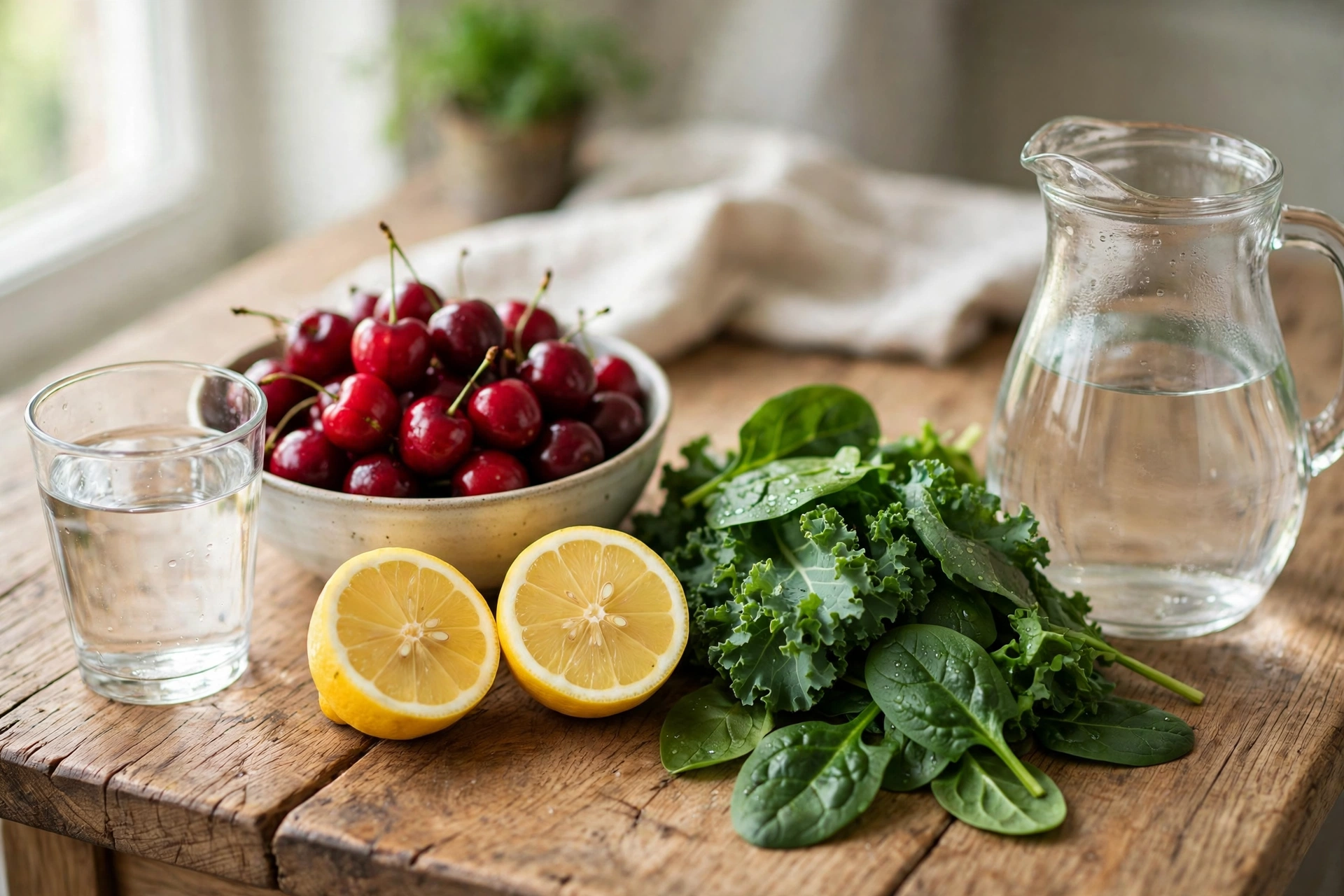
You do not need a perfect diet. A few steady habits make the difference: eat breakfast with some protein, keep a handful of nuts or a piece of fruit nearby so you never get truly ravenous, and drink enough water. Dehydration alone can cause headaches and a racing heart. Think of food as a way to keep your body on an even keel, not as another thing to worry about.
6. Get Morning Sunlight
It sounds almost too simple, but ten to fifteen minutes of morning sunlight is one of the most underrated tools for learning how to reduce anxiety naturally. Sunlight in the morning sets your circadian rhythm, boosts serotonin, and helps you sleep better that night — and better sleep means less anxiety tomorrow.
Step outside with your coffee instead of drinking it at your desk. Walk the dog in the morning instead of the evening. Even sitting by a bright window helps on cloudy days. Your brain treats morning light as a signal that the day has started safely, and that signal echoes through your whole system.
7. Name What You Are Feeling
There is a technique psychologists call “affect labeling,” and it is embarrassingly simple: when anxiety hits, put it into words. “I am feeling anxious about tomorrow’s presentation because I am afraid of looking unprepared.” That is it.
Research shows that naming an emotion reduces its intensity. The vague dread of “something is wrong” becomes a specific, manageable thought. Once it has a name, you can question it: is it true? What is the evidence? What would I tell a friend who felt this way? Writing it down in a journal works even better, because it gets the loop out of your head and onto paper, where it usually looks smaller than it felt.
8. Limit the News and Social Media Spiral
Staying informed is good. Checking the news every twenty minutes and scrolling through other people’s highlight reels is not. Constant bad news keeps your threat system switched on, and social media comparison quietly tells you that everyone else has it figured out — they do not, but your anxious brain believes it anyway.
Set a boundary that feels realistic: check the news twice a day, and give yourself a social media cutoff in the evening. Turn off notifications for apps that make your chest tighten. Many people are surprised by how much calmer they feel within a week of simply checking their phone less. The world will not fall apart because you missed an hour of scrolling.
9. Practice Grounding: The 5-4-3-2-1 Technique
When anxiety pulls you into the future — what if this, what if that — grounding pulls you back into the present. The 5-4-3-2-1 technique is a favorite because it needs no app and no preparation:
- Name 5 things you can see
- Name 4 things you can touch
- Name 3 things you can hear
- Name 2 things you can smell
- Name 1 thing you can taste
It sounds almost childish, and that is exactly why it works. It forces your brain to focus on real sensory information instead of imagined disasters. Keep it in your pocket for moments when anxiety spikes in public — on a crowded train, in a meeting, in a grocery store line. Nobody will even notice you are doing it.
10. Build a Daily Calm Routine
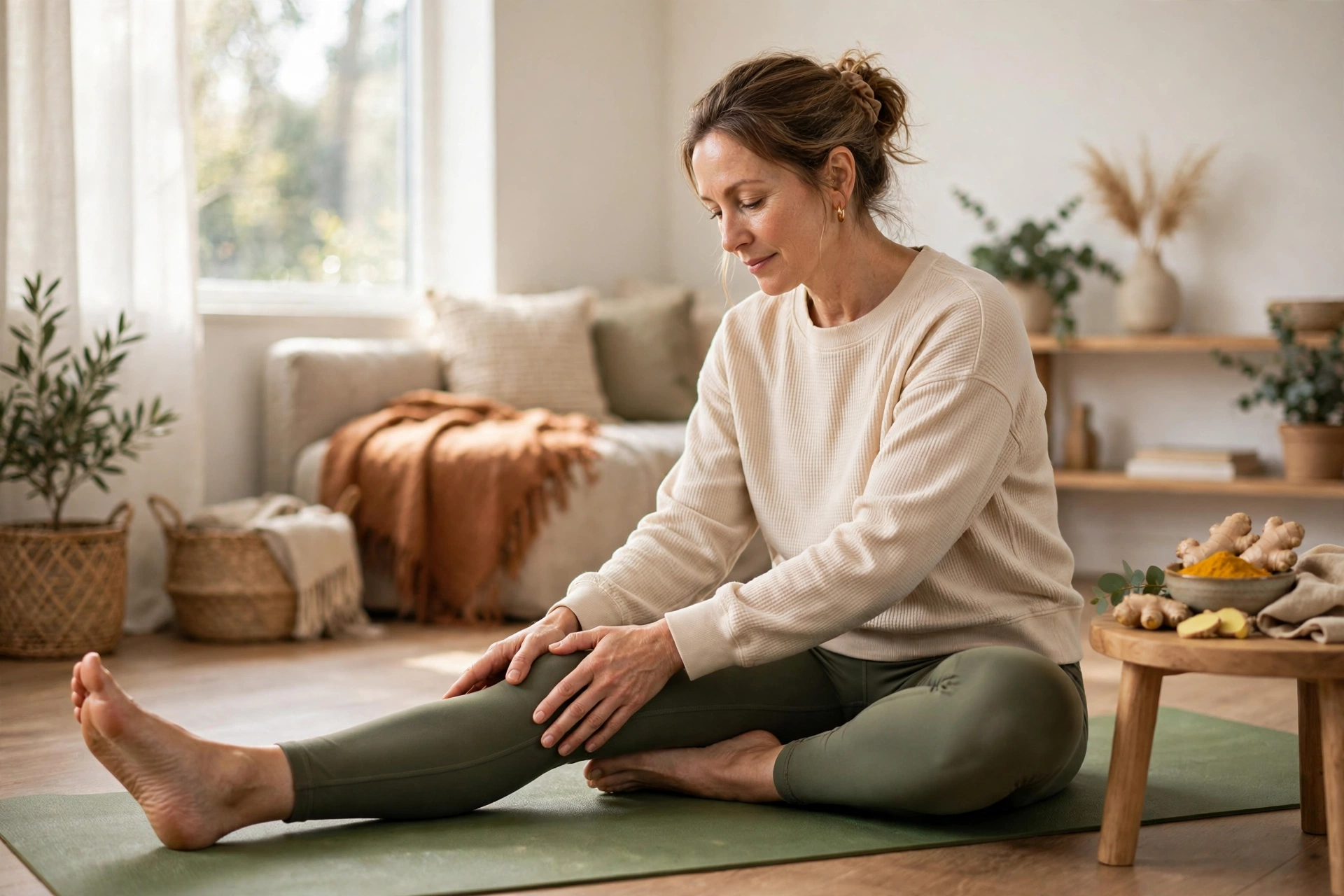
Anxiety loves unpredictability. A small, predictable daily routine gives your nervous system something steady to hold on to. It does not have to be elaborate. Ten minutes of stretching in the morning, a short walk after lunch, and five quiet minutes before bed is a complete routine.
The power of routine when learning how to reduce anxiety naturally is that it works in the background. You are not waiting until you feel anxious to do something about it — you are lowering your baseline stress every single day, so the spikes are smaller and shorter. Think of it like brushing your teeth: you do not wait for a cavity to start brushing. Learn more about managing stress naturally to build habits that support the ones here.
11. Talk to Someone — Out Loud
Anxiety grows in silence. Saying your worries out loud to a trusted person shrinks them almost every time. You do not need a perfect listener or a profound conversation. A simple “I have been feeling really on edge lately” to a friend, partner, or family member can break the isolation that anxiety feeds on.
If talking to someone you know feels too hard, a therapist is a practical option, not a last resort. Cognitive behavioral therapy (CBT) is one of the most effective treatments for anxiety, and it teaches exactly the kind of thought skills described in this article — just with a guide. There is no prize for struggling alone.
12. Try Relaxation Practices That Fit Your Life
Meditation, yoga, and progressive muscle relaxation all reduce anxiety in studies, but the best one is the one you will actually do. If sitting still and meditating makes you more anxious, try a walking meditation or gentle yoga instead. If yoga feels intimidating, try progressive muscle relaxation: tense each muscle group for five seconds, then release it, working from your toes to your head. Most people fall asleep halfway through, which tells you how well it works.
Start with five minutes a day to learn how to reduce anxiety naturally. Apps can help, but so can a quiet room and a timer. Consistency matters more than duration — five minutes every day beats an hour once a month.
Quick Comparison: Which Remedy Works Fastest?
| Remedy | How fast it helps | Best for |
|---|---|---|
| Slow breathing (4-7-8) | Minutes | Acute anxiety, panic moments |
| Grounding (5-4-3-2-1) | Minutes | Racing thoughts, feeling overwhelmed |
| Walking or movement | 10–30 minutes | Restlessness, tension, low mood |
| Cutting caffeine | A few days | Daily jitteriness, poor sleep |
| Better sleep routine | 1–2 weeks | Morning anxiety, irritability |
| Daily calm routine | 2–4 weeks | Lowering overall anxiety baseline |
| Therapy (CBT) | Several weeks | Long-term, lasting change |
Use the fast tools for hard moments and the slow tools for lasting change when learning how to reduce anxiety naturally. You need both.
When to Get Professional Help
Natural remedies help most people with everyday anxiety, but they are not a replacement for professional care when anxiety is severe. Talk to a doctor or mental health professional if anxiety stops you from working, sleeping, or enjoying life, if you have frequent panic attacks, or if you have thought about harming yourself. Getting help is not a failure — it is the smartest, bravest version of taking care of yourself. Medication, when needed, can work alongside everything in this article.
Frequently Asked Questions About How to Reduce Anxiety Naturally
How to reduce anxiety naturally at home?
Start with slow breathing, a short walk, and less caffeine. These three changes cost nothing and most people feel a difference within a week. Add a steady sleep routine and a daily calm habit, and you have a solid foundation without leaving the house.
How long does it take for natural anxiety remedies to work?
Breathing and grounding techniques work within minutes. Lifestyle changes like better sleep, less caffeine, and regular movement usually show results in one to two weeks. Deeper habits, such as a daily routine or therapy, build over several weeks — and the effects tend to last.
Can anxiety go away on its own?
Mild, situational anxiety often fades when the stressful situation passes. But anxiety that keeps coming back usually needs active habits to manage it. The good news is that the habits in this article genuinely retrain your stress response over time.
What foods help reduce anxiety?
Foods rich in magnesium (leafy greens, nuts, seeds), omega-3 fatty acids (salmon, flaxseed), and probiotics (yogurt, fermented foods) support a calmer nervous system. Just as important is avoiding the crashes caused by skipping meals or eating too much sugar.
Is it normal to feel anxious every day?
Feeling anxious sometimes is completely normal — it is part of being human. But daily anxiety that interferes with your work, relationships, or sleep is worth addressing, starting with the habits above and, if needed, a conversation with a professional.
The Bottom Line
Learning how to reduce anxiety naturally is not about finding one magic fix. It is about stacking small, kind habits that teach your nervous system it is safe. Start with one or two remedies from this list — the ones that felt easiest as you read them. Practice them for a week, notice what changes, then add another. Your calmer mind is not built in a day, but it is built one small habit at a time, and you can start today.
Disclaimer: This article is for informational purposes only and is not medical advice. If you have a health condition or concerns, please consult a qualified healthcare professional.