









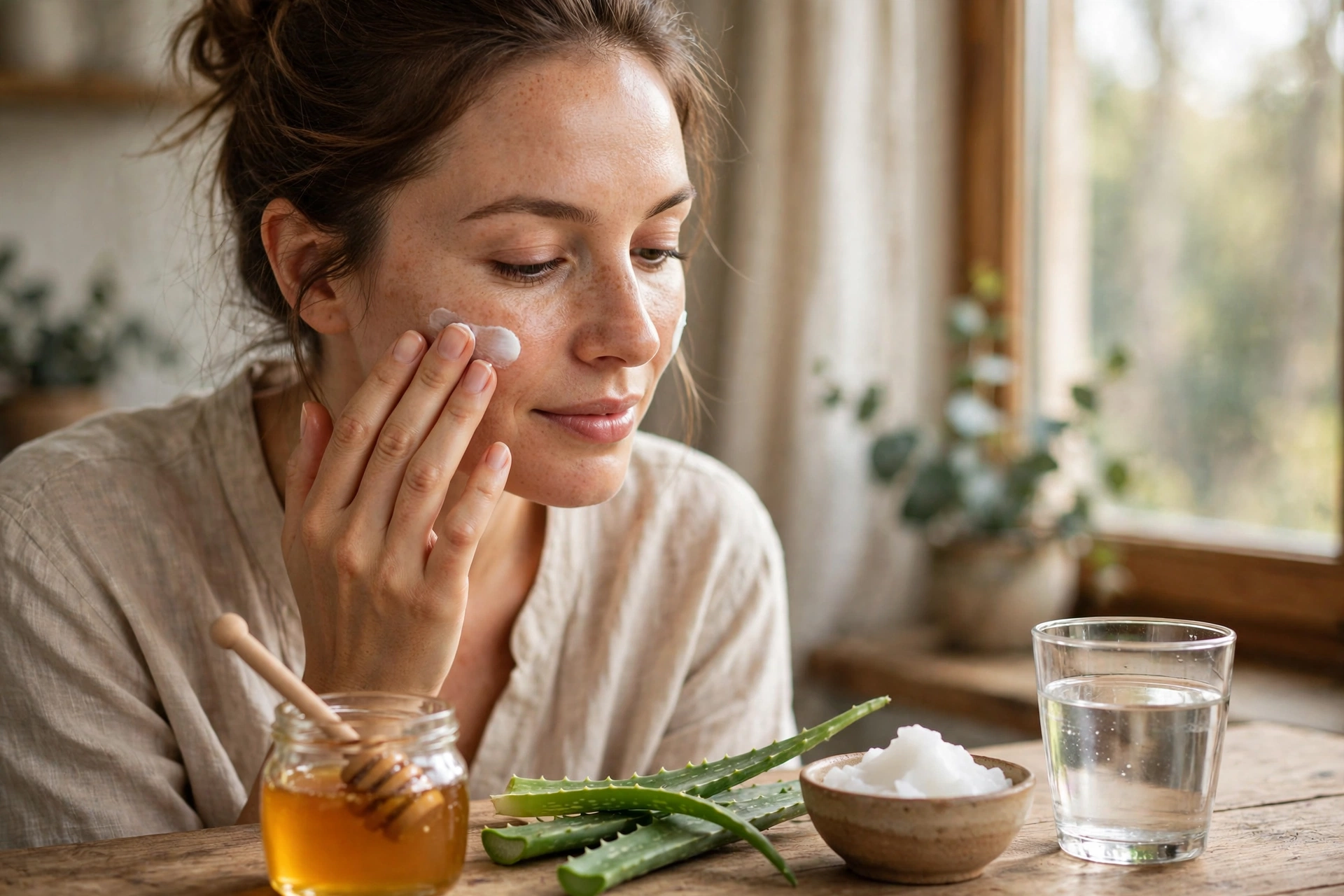
Dry, tight, flaky skin is one of those problems that seems small until it starts running your day. Your makeup sits strangely, your hands sting after washing them, and by mid-afternoon your cheeks feel like paper. If that sounds familiar, you are far from alone — dry skin is one of the most common skin complaints in the United States, and it gets worse in winter, in dry climates, and as we get older.
The good news is that most dry skin responds beautifully to simple, natural care. You do not need a shelf full of expensive products or a complicated ten-step routine. Learning how to treat dry skin naturally starts with understanding why your skin is drying out, and then giving it what it is actually missing: moisture, protection, and a little patience.
This guide walks you through how to treat dry skin naturally, with 12 remedies that actually work. Some take effect the same day; others build results over a few weeks. All of them are gentle, affordable, and easy to start tonight.
What Causes Dry Skin?
Before learning how to treat dry skin naturally, it helps to know what is stealing the moisture in the first place. Your skin has a natural barrier — a thin layer of oils and skin cells that locks water in and keeps irritants out. When that barrier gets damaged, water escapes, and your skin feels dry, rough, and itchy.
The usual suspects are closer than you think. Long, hot showers feel wonderful, but hot water strips away your skin’s natural oils faster than almost anything else. Harsh soaps and cleansers do the same, especially products loaded with fragrance. Cold, dry winter air pulls moisture from exposed skin, and indoor heating makes it worse by drying out the air in your home.
Age plays a role too. After your forties, your skin produces less oil, which is why dryness often shows up even in people who never had a problem before. And sometimes the cause is inside: not drinking enough water, a diet low in healthy fats, or certain medications can all leave skin parched. If your dry skin is severe, cracked, bleeding, or comes with a rash that will not heal, see a dermatologist — that can be a sign of eczema or another condition that needs proper treatment.
How to Treat Dry Skin Naturally: 12 Remedies That Work
1. Moisturize Within Three Minutes of Showering
This single habit makes the biggest difference. After a shower, your skin is damp and its barrier is slightly open — the perfect moment to trap that moisture in. Pat your skin gently with a towel (do not rub), and apply moisturizer while your skin is still slightly damp, ideally within three minutes.
Look for creams rather than lotions. Creams are thicker and contain more oil, so they seal moisture in far better. Ingredients like ceramides, hyaluronic acid, glycerin, and shea butter are especially helpful. If your skin is very dry, an ointment such as plain petroleum jelly on the driest patches works wonders overnight. Choosing the right moisturizer is a key part of how to treat dry skin naturally.
2. Switch to Lukewarm Showers
I know, a steaming hot shower on a cold morning is one of life’s small pleasures. But it is also one of the fastest ways to dry out your skin. Hot water dissolves the natural oils that protect your skin barrier, and the longer you stand under it, the more damage it does.
Turn the temperature down to lukewarm — warm enough to be comfortable, not so hot that your skin turns red. Keep showers to five or ten minutes, and save the really hot water for your tea. Your skin will thank you within a week.
3. Use a Gentle, Fragrance-Free Cleanser
That squeaky-clean feeling after washing your face? It is not a good sign. It usually means your cleanser has stripped away the oils your skin needs. Switch to a gentle, fragrance-free cleanser — a creamy or oil-based one if your skin is very dry — and use it once or twice a day, not more.
The same goes for body wash. Skip the heavily scented shower gels and antibacterial soaps, which tend to be the harshest of all. A mild, moisturizing body wash, or even just warm water on the less sweaty areas, is plenty.
4. Try Coconut Oil as a Natural Moisturizer
Coconut oil is one of the simplest natural remedies for how to treat dry skin naturally, and it works because it does two jobs at once: it moisturizes, and it helps repair the skin barrier. Studies have found it can improve hydration and reduce water loss from the skin.
Warm a small amount between your palms and massage it into dry areas — elbows, knees, shins, and hands are usually the worst. It is best used on the body rather than the face, since it can clog pores for some people. Apply it after a shower while your skin is still damp for the best results.
5. Soothe Skin with Aloe Vera
Aloe vera is not just for sunburn. The gel inside the leaf is mostly water, with compounds that calm irritation and help skin hold moisture. It absorbs quickly, so it feels light rather than greasy — a good option if you dislike heavy creams.
You can use pure aloe vera gel from the store (check the label — it should list aloe as the first ingredient, not alcohol or fragrance), or scoop it straight from a plant leaf if you have one at home. Apply it to dry patches and let it sink in before layering a cream on top.
6. Add an Oatmeal Bath to Your Routine
If your skin is dry and itchy all over, an oatmeal bath can bring real relief. Colloidal oatmeal — finely ground oats — forms a protective layer on the skin, locks in moisture, and calms itching. It has been used for skin care for centuries, and dermatologists still recommend it today.
Grind plain, unsweetened oatmeal into a fine powder, stir a cup into a lukewarm bath, and soak for fifteen to twenty minutes. Pat dry gently afterward and moisturize right away. It is gentle enough to use several times a week, and it is especially helpful during winter flare-ups.
7. Drink More Water — and Eat Your Water Too
When you are learning how to treat dry skin naturally, remember that dry skin is not only an outside problem. When you are dehydrated, your skin is one of the first places it shows. You do not need to force down a gallon a day, but do keep a water bottle nearby and sip through the day instead of waiting until you feel thirsty.
Foods help too. Cucumber, watermelon, oranges, and soups all add to your fluid intake. And healthy fats matter just as much as water: olive oil, avocados, nuts, and fatty fish like salmon give your skin the building blocks it needs to stay supple. If you want to learn more about how hydration supports your whole body, read our practical guide on how much water you should really drink each day.
8. Run a Humidifier Indoors
Heated indoor air is brutally dry — often far drier than the air outside. A humidifier adds moisture back into the air, and your skin notices the difference, especially overnight. Place one in your bedroom and aim for indoor humidity around 40 to 60 percent.
Clean the humidifier regularly, though. A dirty one can grow mold and bacteria, which create a whole new set of problems. A quick rinse and wipe every couple of days is enough.
9. Exfoliate Gently — Once a Week, No More
Flaky, rough patches tempt you to scrub them away, but aggressive exfoliating makes dry skin worse by damaging the barrier further. The trick is gentle, occasional exfoliation that removes dead skin so your moisturizer can actually reach the healthy skin underneath. Gentle exfoliation is a small but useful step in how to treat dry skin naturally.
Once a week is enough. Use a soft washcloth, a mild sugar-and-olive-oil scrub, or a gentle chemical exfoliant with lactic acid. Always moisturize immediately afterward, and never exfoliate skin that is red, cracked, or irritated.
10. Protect Your Skin from Cold and Wind
Cold wind is a moisture thief. When temperatures drop, cover up: gloves for your hands, a scarf over the lower half of your face, and a good moisturizer as a base layer before you go out. This matters more than most people realize — winter is when dry skin complaints peak across the US, from the Northeast to the Midwest.
Sunscreen matters in winter too. UV damage weakens the skin barrier even on cloudy days, and snow reflects sunlight, doubling your exposure. A moisturizer with SPF 30 covers both jobs in one step.
11. Apply Honey as a Natural Mask
Raw honey is a natural humectant, which means it draws moisture from the air into your skin — and it stays there. It also has mild antibacterial properties, which is why it has been used on skin for thousands of years.
Once or twice a week, spread a thin layer of raw honey over clean, slightly damp skin, leave it for fifteen to twenty minutes, and rinse with lukewarm water. Follow with your usual moisturizer. It is simple, it costs almost nothing, and many people notice softer skin after the first use. Avoid this one if you are allergic to bee products, and skip it on broken or cracked skin.
12. Fix Your Sleep and Stress
This one surprises people, but your skin repairs itself while you sleep. Poor sleep raises cortisol, a stress hormone that weakens the skin barrier and slows healing. Chronic stress does the same thing — it is no coincidence that dry patches and flare-ups often arrive during the most stressful weeks of your life.
Aim for seven to nine hours of sleep, and give yourself at least one real wind-down habit in the evening: a warm (not hot) bath, ten minutes of stretching, or simply putting the phone away an hour before bed. If falling asleep is the hard part, our guide on how to fall asleep fast has practical techniques that actually work. And if stress is your main trigger, the habits in our article on how to manage stress naturally pair well with everything in this guide.
A Simple Daily Routine for Dry Skin
When you are learning how to treat dry skin naturally, remedies work best when they become a routine. Here is a simple one that takes less than five minutes a day:
| Time | What to do |
|---|---|
| Morning | Wash with a gentle cleanser, apply moisturizer, then sunscreen with SPF 30 |
| During the day | Drink water regularly, reapply hand cream after washing your hands |
| Evening | Lukewarm shower (5–10 minutes), pat dry, moisturize within 3 minutes |
| Weekly | One gentle exfoliation, one oatmeal bath or honey mask |
Consistency beats intensity. A basic routine done every day will outperform an expensive product used once in a while.
What to Avoid When Your Skin Is Dry
A few everyday habits quietly make dry skin worse. Long hot showers and bubble baths top the list. So do scented lotions and perfumes applied directly to dry skin — fragrance is one of the most common irritants. Skip alcohol-based toners and astringents, which strip moisture, and avoid over-washing your hands with harsh soap; when you do wash, moisturize right after. Avoiding these habits is part of how to treat dry skin naturally.
Be careful with new “miracle” products too. If a product stings or burns, stop using it. And if you use retinol or strong acne treatments, know that they can dry skin out — you may need to use them less often in winter, or buffer them with a good moisturizer.
When to See a Doctor
Most dry skin improves with the remedies above within two to four weeks. See a dermatologist if your skin is cracked and bleeding, if itching keeps you awake at night, if you notice large red or scaly patches, or if nothing you try makes a difference after a month. These can be signs of eczema, psoriasis, or a thyroid or nutritional issue that needs proper diagnosis. There is no shame in getting help — some skin problems simply need more than a home remedy. For reliable information about dry skin causes and treatment, see the Mayo Clinic’s guide to dry skin.
Frequently Asked Questions
What is the fastest way to treat dry skin naturally?
The fastest way to treat dry skin naturally is to moisturize within three minutes of a lukewarm shower using a thick cream, and switch to a gentle fragrance-free cleanser. Most people feel relief the same day, with visible improvement in about a week.
Is coconut oil good for dry skin?
Yes, for most people. Coconut oil is a popular choice for how to treat dry skin naturally: it moisturizes and helps repair the skin barrier. It works best on the body — elbows, knees, and shins — and may clog pores on the face for some people, so test it on a small area first.
Why is my skin so dry even though I moisturize?
You may be moisturizing at the wrong time (on fully dry skin instead of damp skin), using a thin lotion instead of a cream, or undoing the good work with hot showers and harsh soap. Fix the timing and the cleanser first.
Does drinking water help dry skin?
Drinking water helps when you are learning how to treat dry skin naturally, but it is not a cure on its own. Staying hydrated supports your skin from the inside, while moisturizer and gentle care protect it from the outside. You need both.
Can dry skin be a sign of something serious?
Usually it is just weather, age, or harsh products. But persistent, severe dryness can sometimes point to eczema, psoriasis, or thyroid problems. If home remedies do not help within a month, see a doctor.
The Bottom Line
Dry skin is frustrating, but it is also one of the most fixable skin problems there is. Learning how to treat dry skin naturally starts with the basics — lukewarm showers, a gentle cleanser, and a good cream applied to damp skin — then add the natural remedies that fit your life, whether that is coconut oil, an oatmeal bath, or a honey mask. Give it two to four weeks of steady care, and most people see a real difference.
Your skin is not asking for much. A little moisture, a little protection, and a routine you can actually stick to. Start tonight, and let your skin show you the results.
Disclaimer: This article is for informational purposes only and is not medical advice. If you have a health condition or concerns, please consult a qualified healthcare professional.